How to Choose the Right Size of Pet Furniture for a Singapore HDB Living Room
Choosing pet furniture for an HDB living room is not simply a matter of finding a small bed or an attractive feeding station. In a Tampines flat measuring 72 sqm, a Bedok home with a narrow dining zone, or a Punggol unit where the sofa faces the lift lobby, every centimetre affects movement, cleaning, and the visual calm of the room. The correct piece should suit the pet, the residents, and the building’s practical dimensions without making either the animal or the furniture feel trapped.
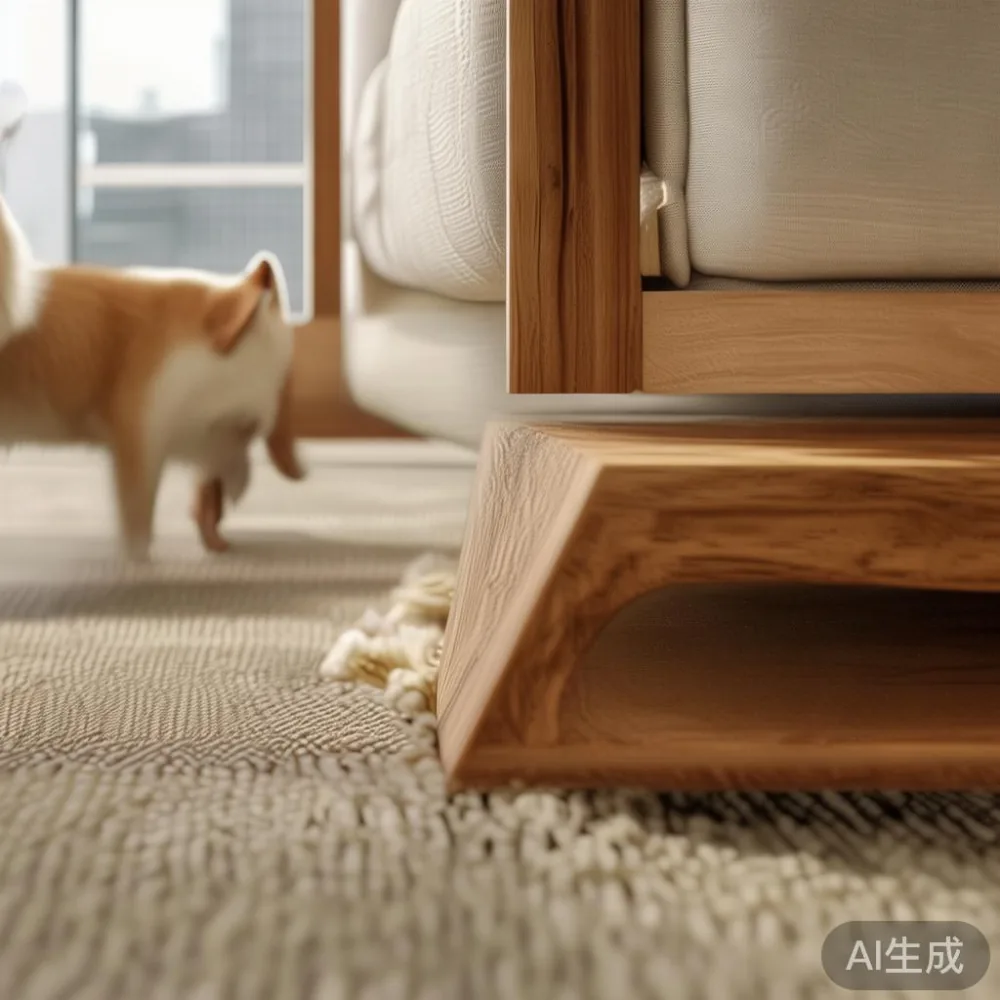
Singapore’s tight planning rules, common corridor widths, lift dimensions, and compact floor plans call for careful measurement before purchase. The aim is not to fill the room with more objects. It is to create a pet-friendly arrangement that remains comfortable for people and compatible with a refined interior. A well-proportioned solid wood sofa, a compact dining table, and durable pet furniture can form a coherent family-room composition rather than a collection of isolated items.
What Size Pet Furniture Fits a Typical Singapore HDB Living Room?
Most HDB living rooms fall within a practical range of approximately 10 sqm to 24 sqm, although usable space depends more on shape than floor area. A rectangular 3.0 m by 4.5 m room may still feel narrow if a corridor connects it to the dining area. Conversely, an L-shaped room of 18 sqm may have ample space around a large sofa. Measure wall-to-wall dimensions, skirting boards, sockets, air-conditioning outlets, and the width of doorways before selecting furniture.
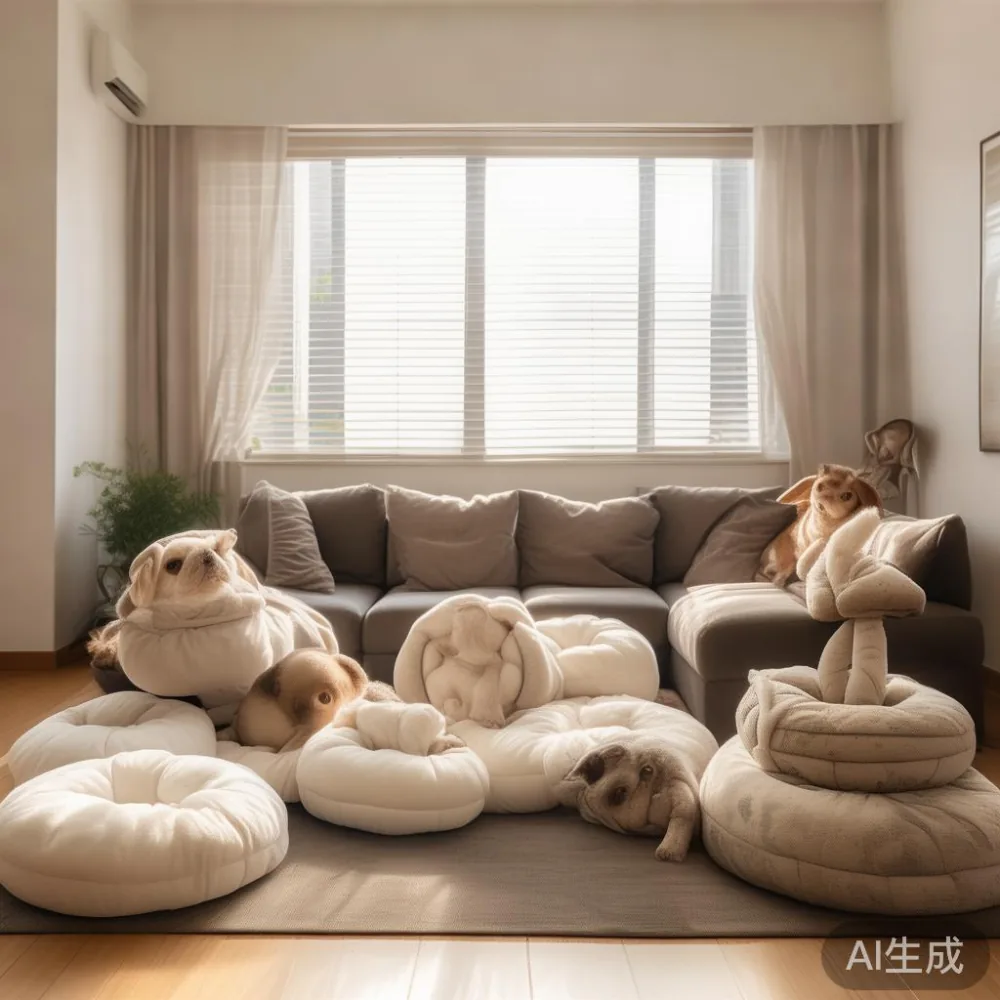
Give large pet furniture a 60 cm to 75 cm-wide zone. This allows a Labrador-sized dog to turn, lie down, and rise without contacting a wall or table leg. A medium pet may need a 45 cm to 60 cm-wide zone, while a cat can manage with a 30 cm to 45 cm-wide perch. These are planning dimensions rather than guarantees; the pet’s length, height, and sleeping habits should guide the final choice.
Leave at least 75 cm of clear circulation beside a sofa, bed frame, or dining table where people pass frequently. If the living room doubles as the main route between the bedroom and kitchen, maintain a continuous 90 cm passage. The corridor outside the flat also matters. Many HDB corridors are around 120 cm to 180 cm wide, while older blocks can have narrower sections near the staircase. A pet cabinet should fit through a doorway of at least 70 cm without forcing its removal to be tilted.
Lift access deserves equal attention. Check the labelled internal dimensions, not the advertised weight capacity. A furniture item should enter upright, or at a slight controlled angle if required, without damaging lift doors or walls. For long boxes, measure the diagonal path from the flat’s parking area to the lift, then from the lift to the unit door. Delivery staff also need a clear route without loose cables, shoes, or other obstacles.
For a room with a 220 cm-wide sofa, consider a pet bench no deeper than 40 cm and no wider than 120 cm. Place it at one end rather than opposite the television cabinet. This arrangement gives the dog a resting position without creating a second obstacle in the main sightline. For cats, a wall-mounted perch at 90 cm to 140 cm above floor level can preserve more floor area than a freestanding tower.
How Do You Measure a Pet Before Choosing a Bed or Cabinet?
Measure the pet while it is lying naturally, then add roughly 10 cm to 15 cm to the bed’s internal length. A curled cat may appear shorter than it needs when stretched, and a young dog can grow quickly. For a rectangular bed, choose a comfortable width of at least 5 cm greater than the pet’s shoulder span. A donut or bolstered bed works well for cats and small dogs, but an open-front bed is easier for older animals with limited mobility.
Observe how the animal uses the room. A pet that sleeps beside its owner may only require a 60 cm by 40 cm mat. A pet that likes to watch the family may prefer a raised perch positioned at 45 cm to 60 cm high. A dog needing shade near a balcony can use a ventilated cabinet with an open front and rear panel, provided balcony access rules and ventilation conditions are respected.
Height should not be guessed. Test the pet against the proposed piece: can it step in without jumping over a lip taller than 8 cm? Can it leave cleanly? For a senior pet, choose an entrance with no threshold and a supportive base. For a puppy, select a washable cover and avoid a cabinet with small gaps where a paw or collar might catch.
Last month I visited a friend’s four-room Bedok flat with two adopted cats. The living room looked crowded with a 200 cm sofa, a 120 cm coffee table, and a 55 cm tower positioned in the doorway. We removed the tower and replaced it with a 90 cm-wide wall-mounted perch. The usable walking route improved by about 35 cm, and both cats still had a clear view of the kitchen.
Which Pet Furniture Style Suits an HDB Living Room?
The style of pet furniture should follow the main room, not introduce a separate visual theme. A pale oak solid wood sofa can pair with warm white walls and greige flooring. A French light luxury approach might use curved profiles, muted cream upholstery, and a marble table with a restrained veined top. A darker walnut finish can shift toward American light luxury, while clean lines and balanced proportions reflect post-modern light luxury.
For a small room, the European light luxury for small living room principle is useful: light colours, slim supports, limited ornament, and one reflective surface rather than several competing accents. A round marble table of 70 cm to 80 cm diameter can ease circulation compared with a rectangular table. Keep the pedestal clear of the pet’s favourite resting spot so tails and beds do not become trapped beneath the base.
Finish also affects maintenance. Pale timber shows paw marks, while darker timber disguises minor wear. A pet bed upholstered in tightly woven fabric should have a removable, washable cover. If the pet scratches, smooth surfaces or replaceable panels are more practical than highly textured fabric. Avoid loose fringe, long cords, or untreated surfaces that could be chewed.
Scale is equally important. A miniature cabinet with a slim silhouette can look decorative but may not support a large animal. A larger item in light timber can visually recede better than a small item in dark timber. The correct choice balances the pet’s body dimensions with the room’s proportions.
How Much Space Should Be Left Around a Solid Wood Sofa and Dining Table?
A 180 cm to 220 cm solid wood sofa generally fits a 10 sqm to 16 sqm living room, although circulation determines the actual limit. Allow 40 cm to 50 cm between the sofa and coffee table, and 60 cm to 90 cm in front of the principal seat. These gaps provide enough room for legs, a vacuum, and pet movement without leaving a hazardous gap.
A dining table in a combined living-dining area should leave at least 75 cm between its edge and the sofa for a person carrying a plate. If the room is very compact, a 100 cm to 120 cm round dining table can seat four people more comfortably than a narrow rectangular table. A 160 cm to 180 cm rectangular dining table usually suits four, while 200 cm to 220 cm versions suit six.
When researching MIDHILL dining table options, the MIDHILL dining table wholesale information can help buyers understand finish and size ranges, but the room measurement must remain the deciding factor. A grand dining table should not be selected only for its appearance. Compare the tabletop projection with the clear route to the kitchen. A table extension that blocks the 90 cm passage when open is less useful than a compact fixed design.
Pet placement should respect these gaps. A dog bed placed behind the dining chairs may be overlooked and create an obstruction; a cat perch near the dining table allows social participation without taking a floor position. A feeding station is best placed on washable flooring, at least 45 cm from the main circulation route, and away from the edge of a balcony.
Can Wardrobes, Nightstands, and Pet Storage Share the Same Wall?
They can, but the pet cabinet must not project into a frequently used route. A 150 cm to 180 cm wardrobe generally needs 60 cm of open space in front of hinged doors or roughly 80 cm to 90 cm in front of sliding doors. The exact requirement depends on the door type and whether a person changes clothes while standing directly in front of it.
A nightstand is often placed beside the bed frame, but this does not make it suitable for pet storage. A small compartment measuring 30 cm by 35 cm may hold toys or a folded blanket, while larger dogs need a dedicated zone. If a pet cabinet is built beside the nightstand, preserve 20 cm to 30 cm between the pieces for cleaning and ventilation. This spacing also prevents a dog from wedging itself between furniture and a wall.
For a guest bedroom, Vintage for guest room styling can combine a timber bed frame, a compact nightstand, and a warm reading light. If comparing bedroom designs, the phrase best Minimalist bed for 2026 appears in current buying guides, while best Vintage bed for 2026 is used for more characterful rooms. Those phrases should not drive a pet-furniture decision. The bed frame must fit first, followed by a pet mat with enough room to stretch.
A wardrobe may conceal a feeding station if ventilation and access are sound, but sealed storage is not appropriate for wet bowls or strongly scented food. A separate 45 cm by 35 cm feeding mat is easier to clean. For overnight use, a washable pet bed beside the bed frame should leave 30 cm to 45 cm on the floor so the animal can lie flat without crowding the occupant.
What Should You Check Before Delivery to Tampines, Bedok, or Punggol?
Check the packaged dimensions, not only the assembled dimensions. A pet cabinet with an external width of 95 cm may arrive in a box measuring 104 cm by 42 cm by 58 cm. The carton must pass through the flat entrance and fit in the lift for the chosen delivery slot. Ask whether assembly is required and whether hardware can be installed inside the unit rather than in the corridor.
Measure the actual delivery route. A common HDB front door is about 80 cm to 90 cm wide, while the main entrance may include metal gates, glass doors, ramps, or a recess. Provide at least 10 cm of maneuvering clearance for turning where possible. For stair access, more help may be required than for a lift-access block.
Also confirm the intended location of the 10-year structural warranty and the lifetime refinishing service. Keep the order record, care instructions, and finish samples in one file. If the piece is solid wood, use coasters under drinks and wash pet bowls on a separate surface. Normal humidity in Singapore is usually around 60% to 80%, so furniture should not sit directly against exterior walls where condensation may form.
Delivery timing should include building rules. Some estates require a delivery booking through the management office or security desk. Reserve a 7-day to 14-day delivery window if the piece is made to order. For a standard in-stock model, installation may still require coordination with a lift booking system. Confirm the charge in SGD before the service begins, including any lift reservation fee or additional handling beyond the ground floor.
A 14-day return period is useful, but check the condition rules for pet furniture. Used beds, chewed surfaces, and items with lingering odour may not qualify for return. Confirm assembly, return collection, and original packaging requirements in writing. A solid wood product should be checked for finish consistency, loose joints, sharp edges, and stability before signing the delivery record.
How Can You Build a Pet-Friendly Room Without Making It Look Like a Pet Shop?
Begin by defining the pet’s important functions: sleeping, feeding, hiding, and observing. Provide only those pieces that match the behaviour. Use coordinated timber finishes, restrained colours, and compact dimensions to make the pet furniture feel like part of the home. A bed with a timber base and neutral cushion can sit beside a solid wood sofa more calmly than a brightly moulded plastic structure.
Use lighting to define the pet zone. A 2700 K to 3000 K warm light creates a comfortable evening atmosphere and complements French light luxury or post-modern light luxury styling. A small brass reading lamp on a nightstand may be more appropriate than ceiling-level lighting. For a cabinet, an adjustable warm strip light can improve visibility without making the room appear harsh, provided the driver and cable are safely secured.
Add washable textiles rather than more furniture. A mat measuring 90 cm by 60 cm can define a dog’s area while remaining visually light. Place it over a rug with a low pile to avoid snagging claws. For cats, a 30 cm-high shelf with a 40 cm diameter top and a 20 cm-wide step provides elevation in a compact footprint.
Keep the room’s visual centre calm. A marble table can be the refined focal point, while pet furniture sits at the edge and supports everyday life. This approach makes the animal’s presence normal rather than dominant, which also helps maintain a light-luxury interior in an HDB flat.
What Is the Right Size for Your Singapore Home?
The right size is the smallest comfortable piece that allows the pet to sleep, turn, and move without compromising the resident’s route. Measure the room, the pet, the sofa, the dining table, and every delivery threshold. Then compare those figures with the packaged dimensions of the piece.
For a medium dog in a compact HDB living room, a 90 cm by 60 cm bed or bench may be sufficient if placed beside the sofa with 30 cm of separation. A cat may need only a 60 cm by 45 cm perch. These practical figures should be adjusted for the animal’s size, age, mobility, and habits.
MIDHILL’s solid wood collection gives buyers a coordinated foundation for a pet-friendly room: a properly scaled solid wood sofa, dining table, wardrobe, bed frame, nightstand, or marble table can be paired with compact pet furniture rather than allowing the animal’s items to appear unrelated. With measurement-led planning, responsible delivery, and finish care, an HDB living room can remain comfortable, polished, and genuinely practical for both people and pets.