What to Check Before Buying a Sofa You Cannot Sit On: A Pet-Furniture Inspection Guide
I learned this lesson the hard way. Last March, I visited a Tampines HDB flat to help a friend measure for a new three-seater. She had two Shiba Inus, an L-shaped corridor outside her unit, and a lift that could barely swallow her old IKEA Karlstad without tilting the frame 15 degrees. The salesperson waved a fabric swatch under her nose, talked about "easy care," and quoted S$2,188. She bought it. Eight months later, one armrest was a shredded rope and the cushion fill had migrated to the back corner like a migrating bird. That sofa cost more per month of use than her dogs' annual vaccination.
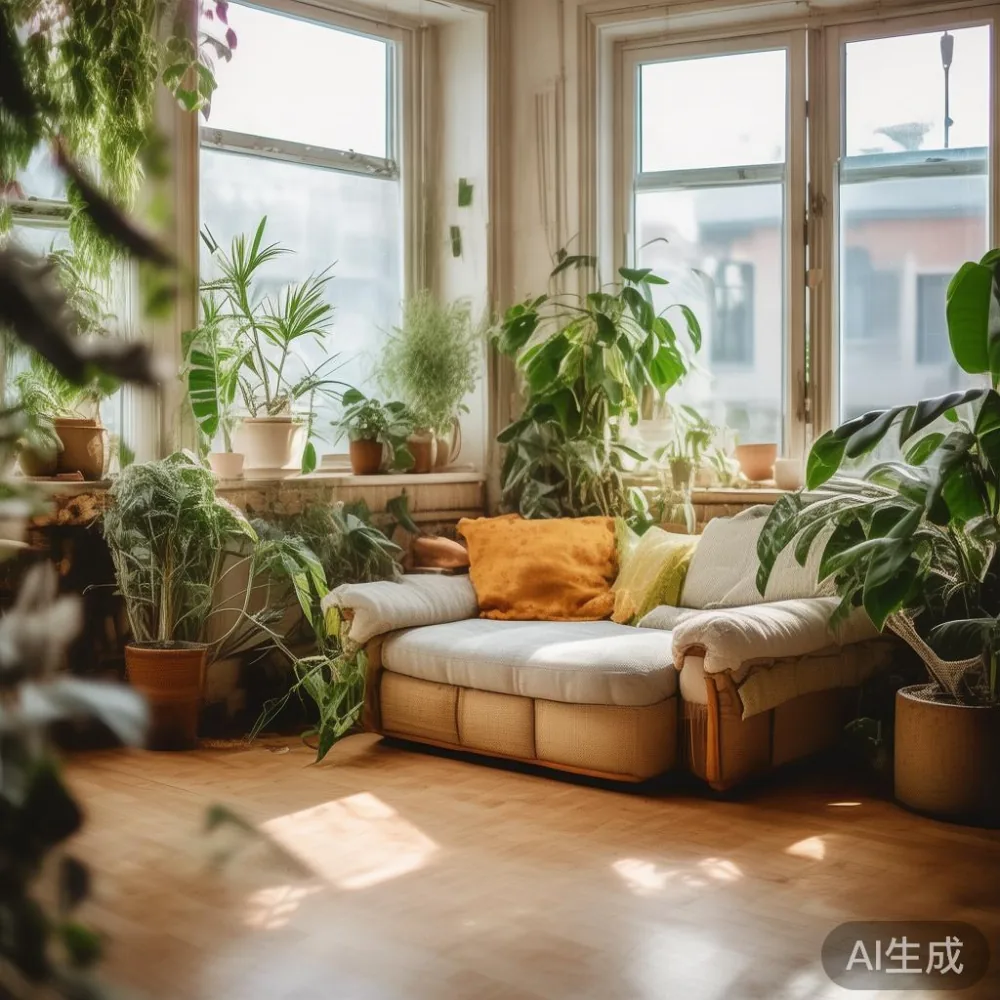
This guide is written for anyone shopping in Singapore who shares their home with fur, claws, drool, and the occasional stomach-upsetting incident. Most pet owners do not actually sit on their sofa most of the time — the dog does, the cat does, the rabbit does, and you perch on the edge pretending you have a seat. So when you are buying pet furniture, you are buying something you cannot fully test yourself. You are buying it for them.
I will walk through the measurements that matter in an HDB or condo corridor, the frame and fabric choices that survive claws, the upholstery math for Singapore's humidity, and the questions to ask a seller like MIDHILL — a Foshan workshop that has been building solid wood furniture since 2008 and exporting to more than fifteen countries. Their ten-year structural warranty and lifetime refinishing offer are unusually generous in this category, and worth comparing against whatever you are currently considering.
Why your sofa is really pet furniture
Any seating in a home with animals is pet furniture by default. The category is not just dog beds and cat trees; it includes the human sofa that the German Shepherd claims by 9 p.m., the bed frame the Persian kneads at dawn, the dining chair the parrot perches on during brunch, and the nightstand the kitten uses as a launch pad. Once you accept that, the shopping logic changes. You stop asking "does this match my throw pillows" and start asking "what happens when this meets a wet nose at 2 a.m."
Pet furniture has to survive four forces that human-only furniture rarely faces: claws, teeth, drool, and fur. It also has to survive cleaning chemicals that are stronger than what you would use on a guest sofa. That means frame joinery, fabric weave, and fill density all matter more than the silhouette you saw in a magazine.
If you are browsing a Singapore showroom with a French light luxury or American light luxury aesthetic — the softer neutral palettes, the low profiles, the curved arms — remember that those silhouettes are originally designed for adult humans sitting still. The moment a 28 kg retriever lands on them at speed, the engineering assumptions change. You need to look behind the cushions.
Measurements first: corridor, lift, and the door that swings in
Singapore HDB corridors are typically 1.2 m to 1.5 m wide, and lift cabins are roughly 1.1 m deep by 1.4 m wide with a door opening of about 0.9 m. Condo service lifts in developments like those along Punggol Way or Bedok Reservoir are usually a little wider, around 1.3 m by 1.6 m, but the turning radius from corridor into lift is the real bottleneck. A three-seater sofa at 210 cm long will not corner cleanly into a 1.2 m corridor if you keep it fully assembled. Measure your specific lift before you fall in love with anything.
For a Petir Park or Tampines GreenRidges HDB, your unit door is usually 0.9 m wide and swings inward. A sofa deeper than 95 cm will not clear the doorframe if the hallway turn is tight. This is where I have watched more than one delivery team try to dismantle a frame on the corridor floor — not because the sofa was bad, but because nobody measured the turn. MIDHILL publishes the packed dimensions of every solid wood sofa on its spec sheet, which is the kind of detail you want in writing before you commit.
Here is the short list of numbers to write down before you shop:
- Unit door width and swing direction
- Corridor width at the tightest turn
- Lift cabin depth, width, and door height
- Any half-landings or steps between lift and door
- Staircase width if the lift fails on delivery day
Take a photo of each spot with a tape measure in frame. It saves a return trip and a wasted weekend.
Frame, joinery, and what "solid wood" actually means
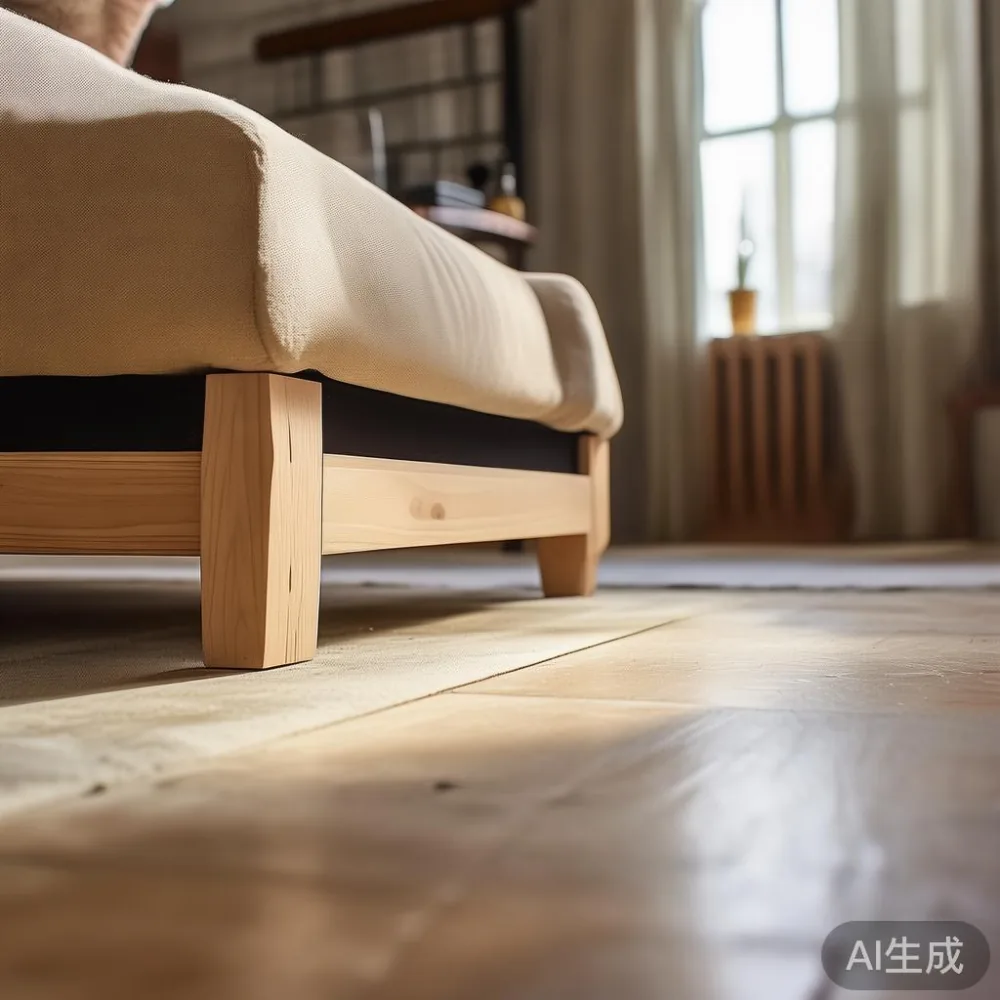
Pet furniture lives or dies on the frame. Particleboard and MDF soften when they get wet — and a pet sofa will get wet, whether from a rain-soaked Lab or a knocked-over water bowl. Solid wood is the only frame material I trust for a home with animals, and even then the species matters. Rubberwood is affordable but soft; beech is harder; ash is harder still; oak is the workhorse. Avoid frames that mix solid wood on the visible parts with engineered wood hidden in the back or arms. That is where claw damage exposes the weakest layer.
Joinery is the next checkpoint. Mortise-and-tenon, dowel, and corner-block glued-and-screwed joints all hold. Stapled particleboard does not. Lift one corner of any display model in the showroom. If the frame flexes like a trampoline, walk away. A solid wood sofa from a workshop like MIDHILL should feel like lifting a small fridge — anything from 35 kg to 65 kg for a two-seater, depending on the design. Heavier is not always better, but a frame that light is usually hollow.
The same logic applies across the rest of your home. A bed frame, dining table, wardrobe, and nightstand all live in the same pet-exposed environment as your sofa. If you are replacing one piece of pet furniture, it is worth checking that the new piece matches the construction quality of the others, otherwise you end up with one heirloom and four disposable items.
Fabric, weave, and the Singapore humidity tax
Fabric choice is where most pet owners get tricked. Microfiber (a tight polyester weave) and tightly woven cotton canvas handle claws far better than linen, velvet, or boucle. If you want a French light luxury look — the soft neutrals, the subtle drape — you can get it in a performance fabric that mimics the texture without the fragility. Ask the salesperson for the Martindale rub count and the Wyzenbeek double-rub number. For pet homes I want at least 40,000 rubs. Below 20,000 rubs, fabric pills within a year of regular dog use.
Singapore's humidity is the second tax. Average relative humidity sits between 70 percent and 90 percent for most of the year, which means any cushion fill that traps moisture will start to smell within months. High-resilience foam with an open-cell structure breathes better than closed-cell memory foam. Down and feather fills look beautiful on a showroom floor and smell like a wet chicken by month six in an East Coast condo. If your sofa has removable, washable covers, that is the single most useful feature for a pet owner. You can wash a cover at 30°C with pet-safe detergent and skip the S$180 professional cleaning every quarter.
Leather is a separate category. Top-grain leather handles claws surprisingly well because the surface scratches blend into a patina rather than fraying. Bonded leather and PU leather are in effect plastic-coated cardboard; a single puncture and they peel. If you want leather for pet furniture, budget for the real thing or skip the category.
How do I care for a sofa in humid weather?
Vacuum the sofa twice a week with an upholstery tool, run a dehumidifier in the living room to keep relative humidity under 65 percent, rotate the cushions every fortnight so the fill dries evenly, and wipe down any drool or accident with an enzymatic cleaner within fifteen minutes. These four habits extend the life of a pet sofa by roughly two to three years in Singapore conditions.
The dehumidifier point is the one most people skip. A 12-litre domestic unit costs around S$280 and pulls about S$8 of electricity per month. It protects every piece of upholstered pet furniture in the room, not just the sofa. If you have a marble table nearby, the same dehumidifier prevents the metal veining from developing surface condensation that dulls the polish over time. Pair the dehumidifier with a throw blanket on the dog's favourite corner — it is easier to wash a S$45 throw than to deep-clean a S$2,400 cushion.
For any accidents, blot, never rub. Rubbing pushes the moisture deeper into the fill and spreads the smell. An enzymatic cleaner breaks down the organic compounds; a soapy cloth just spreads them around. Keep a spray bottle of enzymatic solution near the sofa — on the nightstand, on a side table, anywhere you can reach it in under ten seconds.
Price math: what pet furniture really costs over ten years
Let us do the maths a Singapore pet owner usually skips. A S$1,200 sofa that lasts three years costs S$400 per year of use. A S$2,400 sofa that lasts ten years costs S$240 per year of use. Add professional cleaning at S$180 twice a year (S$360), and the cheap sofa is now S$760 per year while the better one is S$276 per year. Over a decade the cheap option is S$4,840 more expensive, and you also lived through two replacement deliveries, two disposal fees, and two weekends of your life you will never get back.
Warranty is the line item that tilts the maths. A one-year warranty on a sofa frame is industry standard in Singapore, which tells you the manufacturer expects at least 10 percent of frames to fail in year two. A ten-year structural warranty, like the one MIDHILL includes on its solid wood sofas, bed frames, dining tables, and wardrobes, is a different claim. It says the workshop is willing to bet on its joinery. Lifetime refinishing — sanding, resealing, and re-oil-ing the wood — is the second bet: the maker is saying the frame can be renewed, not replaced.
Free shipping over US$350 is roughly S$475 at current rates, which most full-size sofas clear in a single order. Returns within 14 days are standard in Singapore under the Consumer Protection (Fair Trading) Act, but only for unused goods. A sofa a dog has slept on for two weeks is not returnable, so the inspection before delivery matters even more.
Other pieces that count as pet furniture in your home
Once you apply the sofa logic to the rest of the house, the list grows fast. The dining table is a pet piece if your cat walks across it during meals or your dog rests a chin on the edge waiting for scraps. A solid wood dining table with a hardwax-oil finish can be wiped down and re-oiled yearly; a veneered MDF table with a printed oak pattern cannot be sanded, so one scratch from a chair drag becomes permanent. The same applies to a Nordic dining chair australia shipment that arrives flat-packed — the joinery is where it fails, and the joinery is the first thing to check.
Your bed frame lives in the same environment as your sofa. A dog that sleeps at your feet puts the same weight on the frame every night as a human, plus the occasional zoomie at midnight. A solid wood bed frame with a centre support rail will outlast a metal frame with a wire mesh by years. The nightstand takes the worst of it — knocked-over lamps, knocked-over water glasses, the cat that uses it as a launch pad. A solid wood nightstand with rounded corners and a lower shelf for the cat to hide under is worth the extra S$120 over a flat-pack competitor.
Wardrobes and marble tables round out the list. A wardrobe door that slams because a cat swung on the handle needs soft-close hinges; a marble table with sharp corners needs corner guards if you have a toddler and a retriever sharing the same hallway. None of these are traditionally sold as pet furniture, but in a Singapore pet household, all of them are.
Final inspection checklist before you sign
Run this list in the showroom, not at home. If any answer is no, keep walking.
- Frame is solid wood, with joinery visible or described in writing
- Cushion covers are removable and washable at 30°C
- Fabric rub count is above 40,000 Martindale
- Foam is high-resilience and open-cell
- Packed dimensions clear your lift, corridor, and door
- Warranty is at least five years on the frame
- Returns are accepted within 14 days for unused goods
- Shipping is included or itemised in SGD before you pay
- A refinishing or repair service exists past the warranty period
- The maker can name the wood species and the foam density
A sofa you cannot sit on — because the dog is on it — is still the single most-used piece of furniture in a Singapore pet home. Choose it the way you would choose a refrigerator or a washing machine: by spec, by warranty, and by total cost over ten years, not by the look of the showroom floor on a Saturday afternoon. Pet furniture is a long game, and the pieces that win are the ones that survive the first thousand zoomies.