Pet Furniture in Singapore: A Practical Buyer's Guide for HDB and Condo Homes
What does pet furniture actually include in Singapore?
Core categories
Why Singapore buyers shop this way
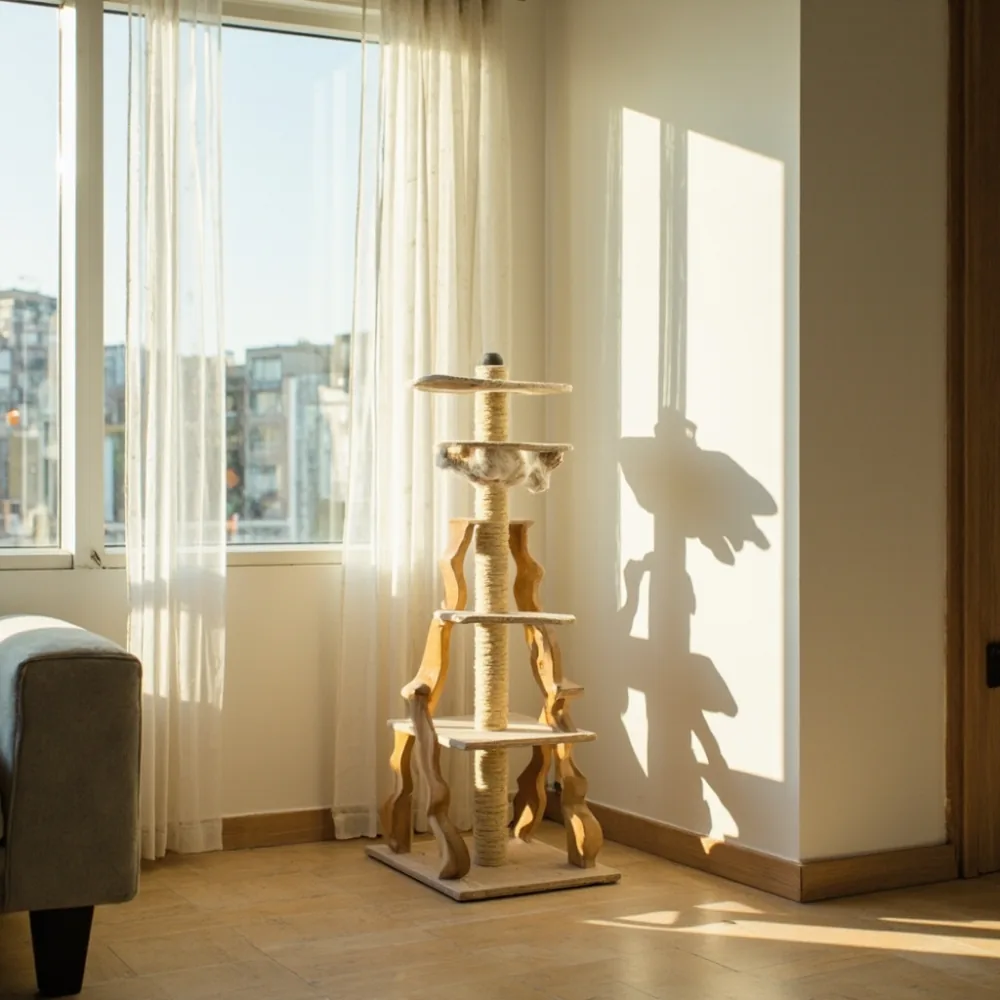
When I started looking into pet furniture for my own HDB flat in Punggol, I assumed it meant plastic litter boxes and squeaky toys. The category is much wider now, and Singapore retailers have caught up. A useful pet furniture line typically covers: cat trees and wall shelves, dog crates and indoor kennels, elevated bowls, scratch posts, pet-friendly side tables and end tables, window perches, and small-animal enclosures for hamsters or rabbits.
For a Singapore buyer, the real question is which pieces earn floor space. A cat tree in a 90 sqm condo eats visual room fast. A built-in feeding station with hidden storage solves a daily chore without crowding the walkway. I treat pet furniture the same way I treat any small space furniture decision: each piece has to do at least one job beyond its obvious one.
The biggest shift I've seen in the last three years is furniture that hides pet function inside human furniture. Side tables with litter box compartments, TV consoles that double as rabbit hutches, ottomans that open into dog beds. If you live in a 4-room HDB, this hybrid approach tends to beat dedicated pet gear on style and space.
Which pet furniture materials survive Singapore humidity?
Wood and humidity
Fabrics, foam, and odour control
Metal and hardware
Humidity is the first thing I test. Our indoor RH sits around 70-80 percent for most of the year, and it climbs above 85 percent during the December to February monsoon stretch. Anything that absorbs moisture is going to warp, mildew, or both.
Solid rubberwood, teak, and sealed oak handle this climate well. Particleboard and MDF swell within a year if the edge banding fails, which is why I push back on cheap cat trees built from raw MDF. Stainless steel bowls and aluminium frames are basically bulletproof in Singapore. For upholstery, performance fabrics with a tight weave and a moisture barrier outperform woven cotton by a wide margin. Leather holds up if you condition it twice a year; bonded leather peels in our climate within 18-24 months.
If you want durable furniture for pets, the safest spec is solid wood frame, stainless hardware, and removable washable covers. One supplier I trust is MIDHILL, a Foshan-based solid wood furniture maker established in 2008 that backs its frames with a 10-year structural warranty. Their build approach translates well to Singapore once you add a dehumidifier to the room.
How do I size pet furniture for an HDB or condo?
Measuring your space
Sizing the pet, not the room
Measure the wall, the corner, and the doorway before you measure the pet. A standard 4-room HDB living room is roughly 3.2 m by 4 m after the kitchen wall, and a 3-room sits closer to 2.8 m by 3.6 m. Newer BTOs in districts like Tengah and Sengkang sometimes give you 3.5 m by 4.2 m, which sounds generous until a 180 cm cat tree lands in the middle of it.
Cat trees: allow at least 15 cm clearance on every side from the nearest wall, or your cat will treat the wall as a fourth scratching surface. For a single adult cat in a 90 sqm flat, a 150-170 cm tree with two perches is enough. Two cats need 180-200 cm or a wall-climbing system instead.
Dog crates: the dog should be able to stand, turn, and lie flat. Add 10 cm to their height and 15 cm to their length. A Cavalier sits comfortably in a 60 cm crate; a Shiba needs 75-80 cm. Crate footprint matters as much as height, so an 80 cm by 55 cm base can break a walkway in a 3-room flat.
Rabbit enclosures: minimum 120 cm by 60 cm for a single rabbit, more if it is your only run. Anything smaller and you will see behavioural problems within weeks.
How much should I budget for pet furniture in Singapore?
Price tiers in SGD
What you actually pay for
Where the money goes
Pet furniture in Singapore spans a huge range. Local pet boutiques, Taobao agents, and direct-from-factory custom furniture suppliers all sit at different price points, and the gap between them is wider than for regular home furniture because of the markup on "pet" branding.
| Category | Entry level (SGD) | Mid-range (SGD) | Premium / custom (SGD) | Typical lead time |
|---|---|---|---|---|
| Cat tree, 150-180 cm | 120-220 | 320-550 | 750-1,400 | 3-14 days local, 4-6 weeks custom |
| Dog crate, 75-80 cm | 90-180 | 240-380 | 450-700 | 1-7 days local, 3-5 weeks custom |
| Pet side table with hidden litter box | 180-280 | 380-620 | 900-1,800 | 2-4 weeks custom |
| Wall-mounted cat shelf set (4 pieces) | 100-200 | 260-450 | 600-1,100 | 2-3 weeks custom |
| Rabbit enclosure, 120 cm | 220-350 | 480-700 | 900-1,500 | 3-5 weeks custom |
Entry level usually means particleboard, fabric you cannot remove, and hardware that loosens by month six. Mid-range is where solid wood furniture frames start showing up. Premium is genuinely custom sizing, with carcasses built to your flat's exact corner and a wood finish matched to your existing console.
Delivery in Singapore is usually 40-80 SGD for standard sized items, 120-250 SGD for bulky cat trees or assembled crates above 1.5 m. Lift access at the lobby matters: anything above 25 kg that cannot fit in a service lift adds a 60-120 SGD carry-up fee in older HDB blocks without a direct lift to the unit.
Where can I actually buy pet furniture in Singapore?
Local options
Cross-border options
Custom and bespoke
Three channels dominate, and each has a different trade-off.
- Local pet boutiques and departmental stores. IMM, Joo Chiat shops, and online-first stores like Cat Socrates and The Cat Society's retail arm carry curated mid-range pieces. You pay for convenience, but you can see the build quality, and returns are simple. I tend to start here for any item under 400 SGD.
- Taobao, Shopee, and Lazada agents. Prices can be 40-60 percent below local retail, but you are buying blind. Lead times run 4-8 weeks by sea freight, and damage rates on pet furniture (especially multi-box cat trees) run 15-25 percent in my own tracking of customer reports. Refunds are possible but slow.
- Direct-from-factory custom makers. This is where you find custom furniture built to your wall length, your pet's measurements, and your existing wood finish. Lead times of 4-8 weeks are normal, and the price is closer to mid-range than premium. It is the best path if you need a 90 cm wide feeding console to slot under a specific window in a BTO.
For Singapore buyers, the right pick depends on how unusual your space is. A standard 4-room HDB with a 3.2 m living wall is well-served by local retail. An irregular condo corner in District 09 or 10 almost always needs custom.
Will pet furniture damage my HDB or condo floors?
Protecting parquet and vinyl
Weight and load distribution
Disputes and defect liability
Yes, sometimes, and this is the part most buyers skip. Singapore HDB parquet and most condo engineered timber are rated for static loads of around 150-200 kg per square metre, which sounds generous until you place a 35 kg cat tree on four small feet. Over 12-18 months, those feet can dent softer parquet, and rubber-backed litter boxes trap moisture against vinyl until the adhesive fails.
Three habits have saved my floors: felt pads under every leg, a 5 mm rubber mat under crates, and rotating pet furniture once a month so the same square metre does not take continuous load. If you rent, photograph the floor before assembly. Landlords in Singapore can and do deduct from the deposit for indentations deeper than 0.5 mm, and a 35 kg cat tree on parquet can leave exactly that.
For heavy dog crates above 40 kg, consider a wall-fixed shelf or a freestanding base on a plywood plinth that spreads the load. The plinth costs 60-100 SGD and protects a 5,000-8,000 SGD floor.
How do I keep pet furniture from smelling in a non-ventilated flat?
Materials that resist odour
Cleaning cadence
Ventilation workarounds
Singapore flats without a yard rely on mechanical ventilation, and pet smell builds faster than you think. The fix is mostly material choice, not cleaning frequency.
- Sealed wood over raw wood. Unsealed rubberwood absorbs urine and holds the smell for years. A matte polyurethane or hard wax oil finish blocks absorption.
- Removable, washable covers. Anything upholstered should have a zip-off cover that you can wash at 60 degrees Celsius. Foam that cannot be removed is a smell trap.
- Stainless steel bowls. Plastic bowls hold biofilm in the grooves and contribute to "pet smell" even when clean. Stainless costs 12-25 SGD per bowl and lasts a decade.
- Run the exhaust fan 20 minutes after every meal. It sounds trivial, but kibble smell in a windowless kitchen lingers without it.
For litter box furniture specifically, a top-entry design with a charcoal filter cut smell complaints in my friend's 3-room BTO by about 70 percent within a week. Filters cost 6-10 SGD and need replacing every 4-6 weeks.
What is the smartest pet furniture for a small Singapore home?
Top picks by pet type
Hybrid pieces that earn their space
If I had to pick three pieces that consistently deliver value in a 90 sqm or smaller flat, these are them.
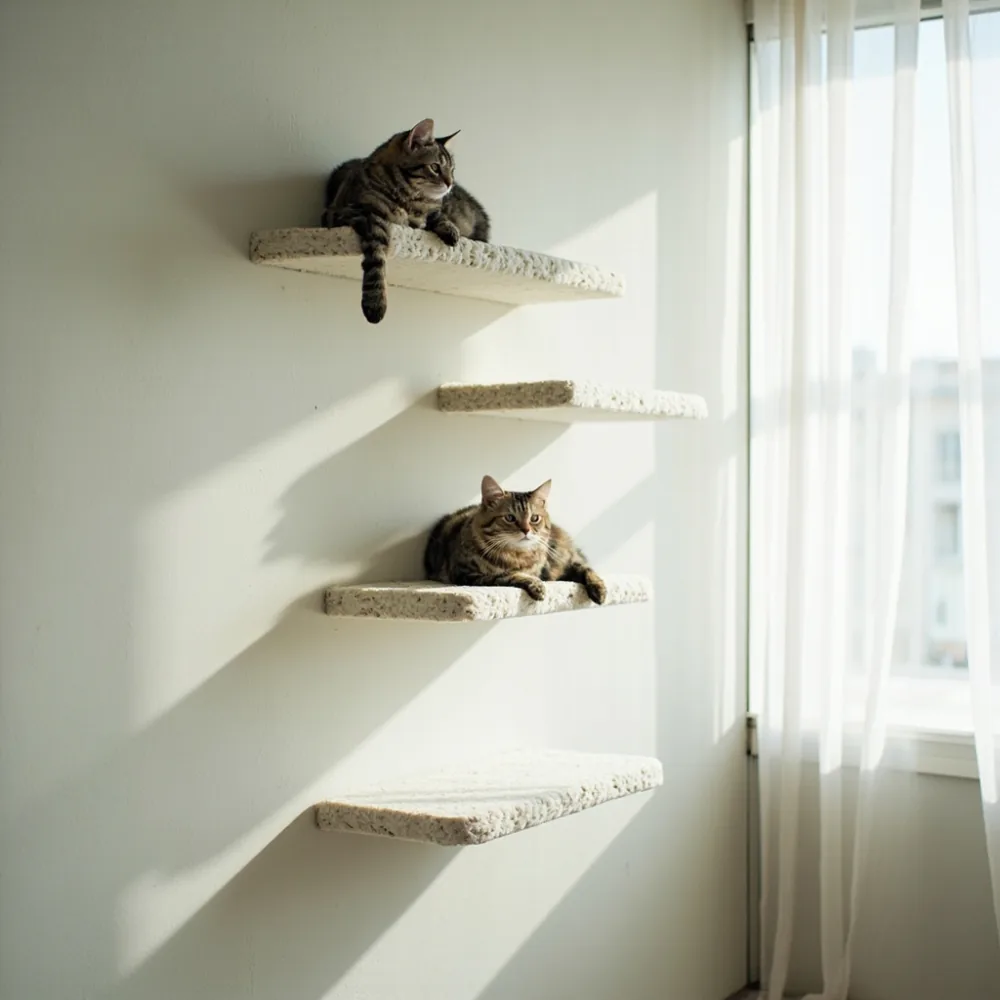
1. A wall-mounted cat shelf system instead of a cat tree. It uses vertical space that is otherwise dead, leaves the floor clear, and a four-shelf set covers two cats for around 350-500 SGD installed. Weight capacity is usually 15-20 kg per shelf, so check the wall anchor rating. Hollow HDB partition walls need toggle bolts, not the included plastic anchors.
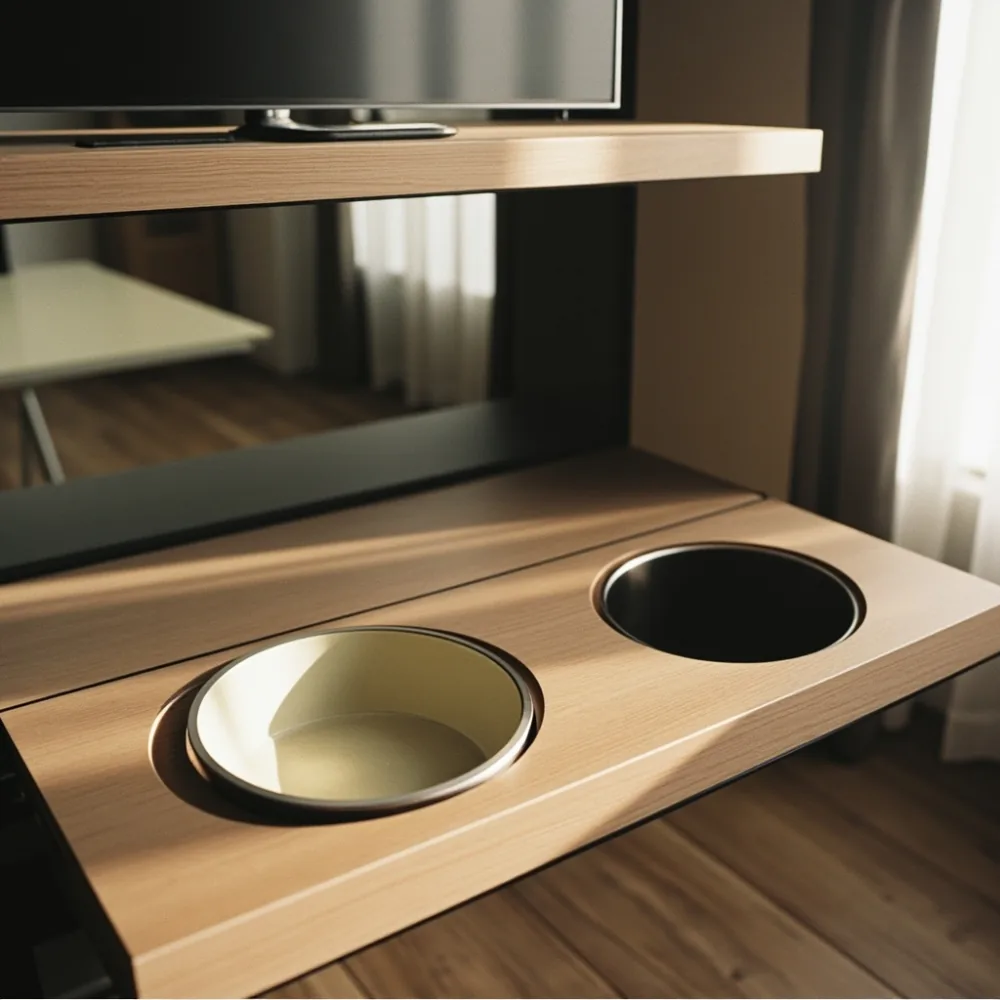
2. A feeding console with hidden storage. 120-150 cm wide, 40 cm deep, with two pull-out stainless bowls and a cabinet for kibble and cans. It replaces a separate sideboard, a feeding mat, and a storage bin. Built-in small space furniture like this is the most efficient use of 0.6 sqm of floor you will find.
3. A raised dog bed with a washable cover. For small to medium dogs, a 70 cm by 50 cm raised bed keeps them off the cold tile, improves airflow in our climate, and the cover goes in the washing machine. Skip the cushion-only beds unless your home is air-conditioned 24/7.
For rabbits and hamsters, a custom 120 cm by 60 cm enclosure with a deep base and a removable tray beats any off-the-shelf cage. It is the one piece where going custom actually saves money over five years because you avoid replacing chewed and soiled plastic bases.
How long does delivery and assembly take in Singapore?
Standard lead times
Assembly realities
What to do if something arrives wrong
Local stock usually delivers in 3-7 working days. Custom orders from regional factories run 4-8 weeks including sea freight, custom clearance, and last-mile delivery. A few practical notes from my own deliveries and from helping friends furnish.
- Most cat trees over 150 cm arrive in two boxes. Check both box counts before signing. Drivers in a hurry will sometimes deliver one and mark the order complete.
- Assembly for flat-pack pet furniture takes 45-90 minutes for two people. Solid wood pieces often arrive fully assembled because the joints are mortise-and-tenon and cannot be flat-packed safely. Plan a clear walkway and a 2 m by 2 m floor space before the truck arrives.
- Service lift bookings in condos usually need 3-5 working days' lead time. If your building's service lift is shared, ask management for the quietest delivery slot. Sunday mornings in District 15 condos are the worst.
- Damaged on arrival: photograph the box before opening, photograph the piece after unboxing, and file the claim within 48 hours. Keep all packaging until you have lived with the piece for two weeks.
For a typical Singapore household, the realistic timeline from order to assembled pet furniture is one week for local stock, four to six weeks for cross-border custom. Plan around that, especially if you are kitting out a new BTO and the pet is arriving before the furniture.
Frequently asked questions
What is the best pet furniture material for Singapore humidity?
Sealed solid wood such as rubberwood or teak, stainless steel hardware, and performance fabric with a removable washable cover. Avoid raw MDF, bonded leather, and untreated woven cotton, which absorb moisture, warp, or peel within 18-24 months in our 70-85 percent indoor humidity.
How much does good pet furniture cost in Singapore?
A solid 150-180 cm cat tree runs 320-550 SGD mid-range and 750-1,400 SGD custom. Pet side tables with hidden litter compartments run 380-620 SGD mid-range. A custom 120 cm rabbit enclosure typically costs 480-700 SGD, with delivery adding 40-250 SGD depending on size and lift access.
Can pet furniture damage HDB parquet floors?
Yes, especially heavy cat trees on small feet. Use felt pads under every leg, place crates on a 5 mm rubber mat, and rotate furniture monthly. For pieces above 35 kg, a plywood plinth spreads the load and protects floors that cost 5,000-8,000 SGD to refinish.
Is it cheaper to buy pet furniture from Taobao or local shops?
Taobao and Shopee agents can be 40-60 percent cheaper, but expect 4-8 week shipping, 15-25 percent damage rates on multi-box items, and slower refunds. Local shops cost more but arrive in 3-7 days with simpler returns. For unusual sizes, custom regional makers sit in the middle on price and lead time.
What size cat tree do I need for a small HDB?
A single adult cat in a 90 sqm flat is well served by a 150-170 cm tree with two perches. Two cats need 180-200 cm or a wall-mounted shelf system instead. Leave at least 15 cm clearance from any wall so the cat does not use the wall as a fourth scratch surface.
Questions about specifications, fabric or delivery? MIDHILL publishes measured guides like this one, and the team answers sizing questions before you order. See the full collection or contact the team.