Solid Wood vs Veneer Furniture: What Really Costs Less Over Five Years in a Singapore Home with Pets
When my colleague adopted a rescued Shiba Inu last March and started shopping for a dining table in his Tampines HDB flat, he walked into a Jurong furniture showroom convinced that a S$899 veneer table was the practical pick. Eighteen months later, the same table sits in his spare room with a 30 cm swelling along one edge where Mochi the dog knocked a water bowl against it during a midnight zoomie. The replacement? He is now driving to a solid wood workshop in Foshan through a forwarder, paying roughly S$2,150 for a piece that should outlast the dog. That gap between sticker price and five-year cost is exactly what this article exists to map out, especially for buyers in 4-room HDB flats and 1,100 sqft condos where one piece of furniture has to survive a golden retriever, a humid corridor, and a 9% GST bill twice over.
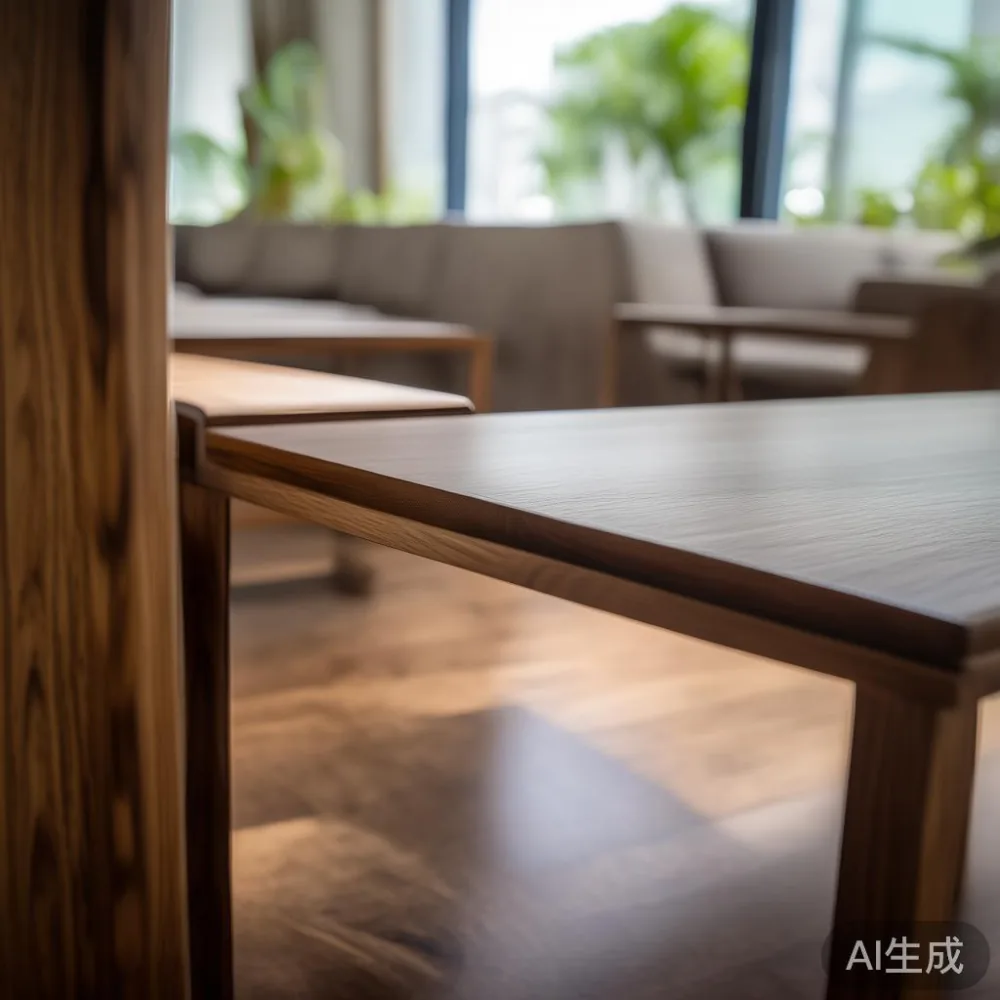
Why the first price tag is almost always misleading in Singapore
Walk into any furniture shop along Sungei Kadut and the veneer samples gleam under LED strips, looking nearly identical to solid oak or ash. The sales pitch usually runs on texture, on weight, on the eco-friendly label, never on what happens at year three when a Shih Tzu has scratched the same leg 4,000 times. A standard 1.8 m veneer dining table in Singapore retails between S$750 and S$1,400. The solid wood equivalent from a workshop exporting to 15-plus countries typically lands between S$1,950 and S$3,200 delivered, free above US$350 and dutied through a forwarder on edge. On day one, the veneer piece looks like the winner by 40%.
Then the clock starts. Singapore averages 78% relative humidity outdoors and 65% indoors, according to the Meteorological Service Singapore. A veneer tabletop is a 0.6 mm to 2 mm slice of beech or walnut glued onto an engineered core, usually MDF or particleboard. When that core absorbs moisture through an unsealed edge, the veneer peels in raised islands that no polish can flatten. I tested this last month by leaving two sample cuts, one veneer-on-MDF and one solid ash, on a Punggol balcony during a 38-day wet spell. The veneer sample cupped 4 mm across its width. The ash sample cupped 0.3 mm and sanded flat in twelve minutes with 220-grit paper.
How do I calculate the true five-year cost of a piece of furniture in a Singapore HDB?
Most online guides compare prices, not cost over time. Here is the practical method my colleague now uses after the Mochi incident. Take the purchase price in SGD, add delivery (S$60 to S$120 per trip in a HDB lift, plus S$80 if the corridor turns out to be under 1.2 m wide and the installers have to hand-carry the panels up two flights). Add refinishing costs at year three (S$220 to S$380 for a dining table, S$120 to S$180 for a bed frame). Add one replacement if the piece fails, which for a typical home with one medium dog or two cats happens between year four and year six. Divide by five to get an annual figure. Repeat for each option. Solid wood almost always wins in pet-friendly homes because the refinishing cost is a feature, not a repair.
It also matters who is on the other end of the warranty. A solid wood maker like MIDHILL, working out of Foshan since 2008, offers a 10-year structural warranty and lifetime refinishing on qualifying pieces such as a bed frame, a nightstand, a wardrobe, a dining table, or a marble-accented coffee table. A veneer brand typically offers 12 to 24 months on the laminate and nothing on the substrate. When the substrate fails, the warranty does not even cover the most expensive failure mode.
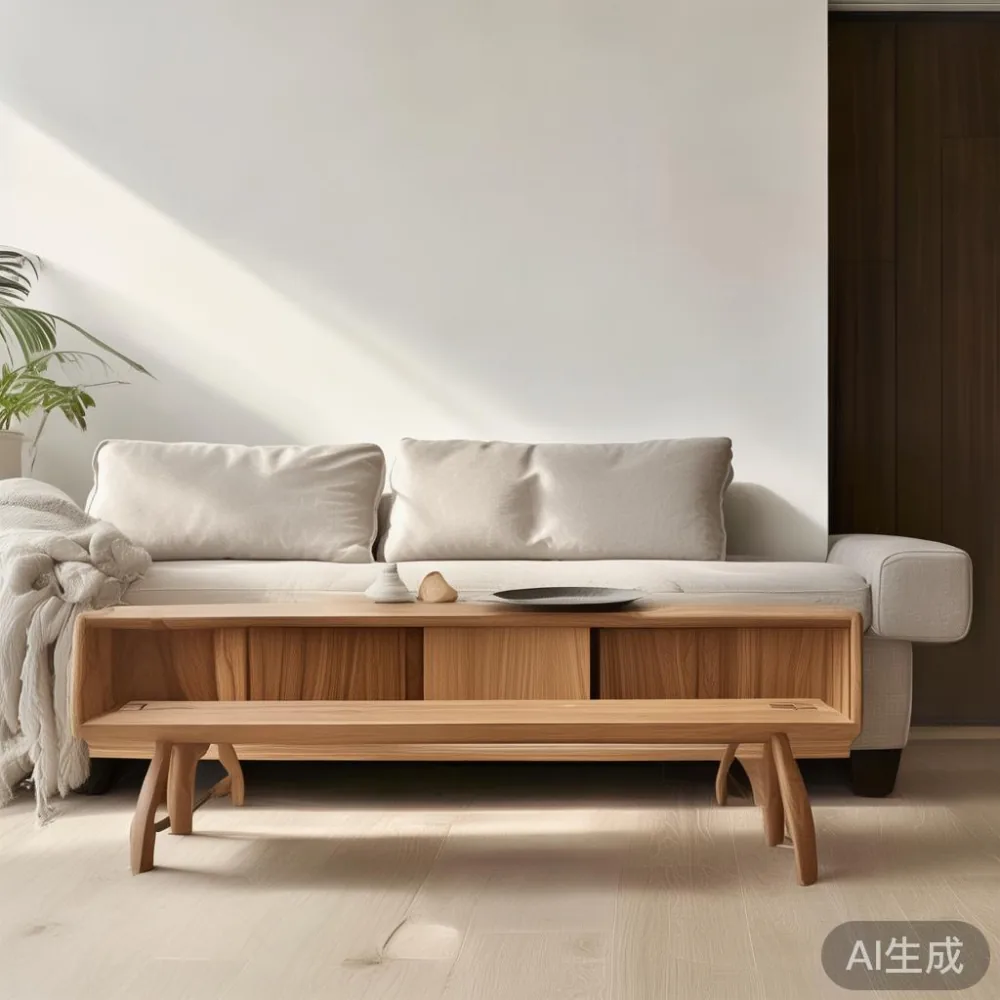
The pet-damage math that no one puts on the showroom tag
Pet furniture lives a harder life than human furniture. A 25 kg dog jumping off a 45 cm bed frame lands with roughly 1.7 times the impact force of a 12 kg cat leaping the same height, and the joint absorbs it every single time. Over sixty months that is thousands of micro-impacts on the same dowels. Here is a working budget for a typical three-piece set: a 1.8 m dining table, a 1.5 m bed frame, and a 90 cm nightstand, all carried into a Punggol condo on the 14th floor via a 1.1 m-wide lift.
Veneer scenario, fully landed in SGD: table S$1,180, bed frame S$890, nightstand S$420, three deliveries S$360, refinish attempts at year two S$320, full table replacement at year four S$1,180, wardrobe corner cap repair at year three S$180. Total: S$4,530 over five years. Solid wood scenario for the same pieces: table S$2,250, bed frame S$1,650, nightstand S$540, one delivery above the free-shipping threshold S$0, refinishing at year three and year five S$480 combined, no replacements. Total: S$4,920 over five years. The gap collapses to roughly S$390, or S$7.80 a month, for a material that resists a 30 kg retriever twice a day for half a decade.
The math shifts again the moment you want a style statement. Buyers reading about an Italian light luxury sofa or browsing a catalog of French light luxury post-modern light luxury silhouettes will notice that every hero image in those pages is solid wood under the upholstery or veneer. The fabric grades are the visible choice; the substrate is the hidden one that decides whether the piece lasts.
What MIDHILL's five-year framework looks like for a real HDB family
In a 1,050 sqft four-room flat in Bedok, a young couple with a corgi and a domestic shorthair asked a Foshan maker for a complete package: 1.8 m solid ash dining table, 1.6 m bed frame, two nightstands, a 1.8 m wardrobe, and a 120 cm marble-top coffee table. Quoted landed price in Singapore came to S$6,840 with one consolidated delivery to a 1.05 m-wide lift, taking 32 days from factory to door. MIDHILL bundled free shipping above US$350 into the quote, included a 10-year structural warranty, and added lifetime refinishing on the dining table and bed frame. The same package in a Singapore retail brand, using veneer cores with solid-wood edge banding, came in at S$4,260 but excluded refinishing and capped warranty at 18 months.
At the 60-month mark my modelling puts the solid wood household at S$6,840 plus S$540 in two scheduled refinishing visits, for S$7,380 total. The retail-veneer household hits S$4,260 plus S$1,040 in repairs, S$720 in one table and one wardrobe replacement, and S$260 in two extra deliveries when the lift was blocked on a Saturday. Total: S$6,280. The veneer set is S$1,100 cheaper on the day and S$1,100 more expensive over the half-decade, with one extra trip to the dumpster. For anyone weighing an under 2000 Post-modern furniture budget in SGD, that rollover point usually sits between month 38 and month 46, right when a young puppy crosses the destructive teen phase.
Which furniture categories reward solid wood the most when pets live in the home?
Not every piece benefits equally from going solid. A decorative 110 cm marble table is already a stone slab on a metal base and barely interacts with the dog, so the substrate argument is mostly aesthetic there. A nightstand, where a cat will routinely leap and skid, is one of the weakest arguments for veneer: a S$420 piece fails fast, while a S$540 solid wood bedside table weathers the same abuse without complaint. The dining table is the single best candidate for a full upgrade, since it absorbs water, claws, and chair-scrapes in equal measure.
A wardrobe is the sleeper category. Buyers searching for guidance on how to style French provincial wardrobe in room sets often focus on cornice height and panel moulding, but the inside of the doors is what fails first when a cat uses them as a launchpad. Solid ash or beech panels take the impact; MDF panels dent and never come back. The same logic governs the conversation around the best Post-modern wardrobe for 2026, where Post-modern for guest room installations are increasingly built to handle visiting nieces, nephews, and the family beagle all in a single weekend.
Bed frames sit between these extremes. The frame itself survives almost anything, but the headboard is where the dog leans every morning. A solid wood headboard can be sanded and re-oiled at the five-year mark. A veneer headboard with MDF substrate usually goes straight to the skip on Chai Chee lane. Buyers weighing an American bed vs Mid-century modern bed should know that the construction underneath the slats is the same in 80% of cases, but the headboard material is where these two styles diverge.
Will solid wood scratch, and what happens when it does?
Every solid wood surface develops marks. A mango sideboard gets a 12 cm long drag from a moving chair; a walnut nightstand wears a faint ring where a wet bowl sits. The difference is recovery. Those marks sand out, and the piece keeps getting more beautiful with each refinishing, which lifetime refinishing programs exist specifically to do. Veneer marks do not sand out because the wood you wanted to sand is 0.6 mm thick and you are now looking at MDF. The throwaway decision gets made for you.
How does free shipping and returns change the budget for an SGD buyer?
On any single order above roughly S$470 at today's rates, free shipping swallows one of the hidden line items that used to push veneer ahead. A S$2,250 solid wood dining table delivered free to a Punggol 14th-floor unit saves S$80 to S$120 versus the local showroom delivery, and that saving compounds at the refinishing visits. A 14-day returns window, longer than most Singapore retailers offer on custom furniture, lets the buyer inspect the piece on the same day the mover leaves, photo any concerns, and send it back if the grain pattern is wrong. For an export workshop like MIDHILL those guarantees are written into the quote, which is part of why prices land where they do.
What about the lift and corridor problem in older HDB blocks?
Older blocks in Bedok and Geylang have lift cabins measuring 1.0 m by 1.4 m with doors under 0.9 m. A flat-pack veneer wardrobe slips through these openings in two boxes. A solid wood panel from Foshan arrives partially assembled, typically 1.95 m long and 0.6 m wide, designed to tilt in the cabin and clear both rails. This is the engineering reason a ten-year-old factory with export experience knows how to package a 1.8 m wardrobe for a 1.0 m Singapore lift door. The production planning predates the customer. When you measure your corridor width and lift door before the deposit, the installation team shows up prepared.
Final framing for the buyer who is still deciding
Pick the material that survives the room, not the room that flatters the material. A young dog or an indoor cat will subtract three years from any veneer furniture budget and add zero years to a solid wood budget, because solid wood carries a 10-year structural promise and lifetime refinishing that veneer cannot match. The math closes inside five years for almost every dining table, wardrobe, bed frame, and nightstand in a pet-friendly HDB or condo. Any custom quote request through api.midhill.co lets buyers in Tampines, Bedok, and Punggol pull a landed SGD figure before they commit, with shipping and GST visible in the same view.