Veneer vs Solid Wood: A 5-Year Cost Comparison for Pet Furniture in Singapore
Choosing pet furniture for a Singapore home is rarely just about the purchase price. A dog bed, pet console, feeding station, or scratching cabinet must survive claws, urine, paw oils, daily wiping, humid air, lift landings, and at least 5 years of use. The material decision therefore affects the budget well beyond delivery day.

This comparison prices a representative solid wood bed frame with integrated pet storage against a veneered bed frame with the same layout. I also compare smaller pet furniture, including a solid wood feeding bench and a marble table used as a pet-side surface. Prices are indicative Singapore retail prices in SGD, including 9% GST where stated, but excluding delivery outside Singapore.
For context, many HDB flat doors measure about 85 to 90 cm wide, while common condo lift cars and lift openings may be only 90 to 110 cm across. A 150 cm long bed frame and a 120 cm dining table may fit physically yet still be difficult to manoeuvre around corridors. Solid wood tends to be heavier than comparable veneer construction, making the 10-year structural warranty and lifetime refinishing offered by MIDHILL especially relevant for long-term planning.
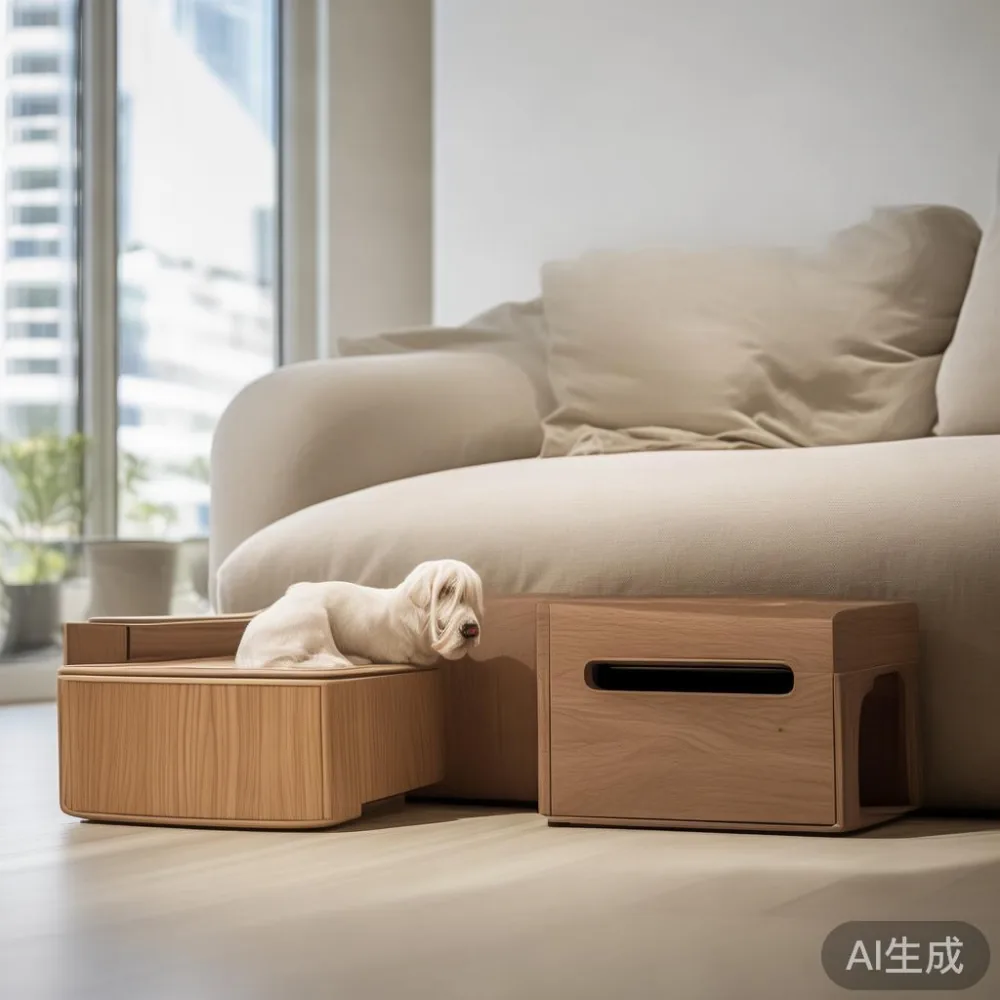
What are the real differences between veneer and solid wood?
Solid wood is timber throughout the visible and structural sections. Veneer is a thin layer of real wood bonded to a smaller core, often plywood or engineered timber. The veneer can look convincing, but its long-term behaviour depends on the adhesive, edge sealing, core quality, and how well the surface resists moisture.
For Singapore, relative humidity commonly moves through the day as air-conditioning lowers moisture and outdoor humidity rises it. Direct splashes can also reach pet furniture near feeding bowls, water bowls, or an open balcony door. Solid wood can swell, check, or crack as moisture changes; veneer can delaminate, lift at an edge, or stain. Neither material is moisture-proof, and neither should be placed beside a bowl without a washable mat.
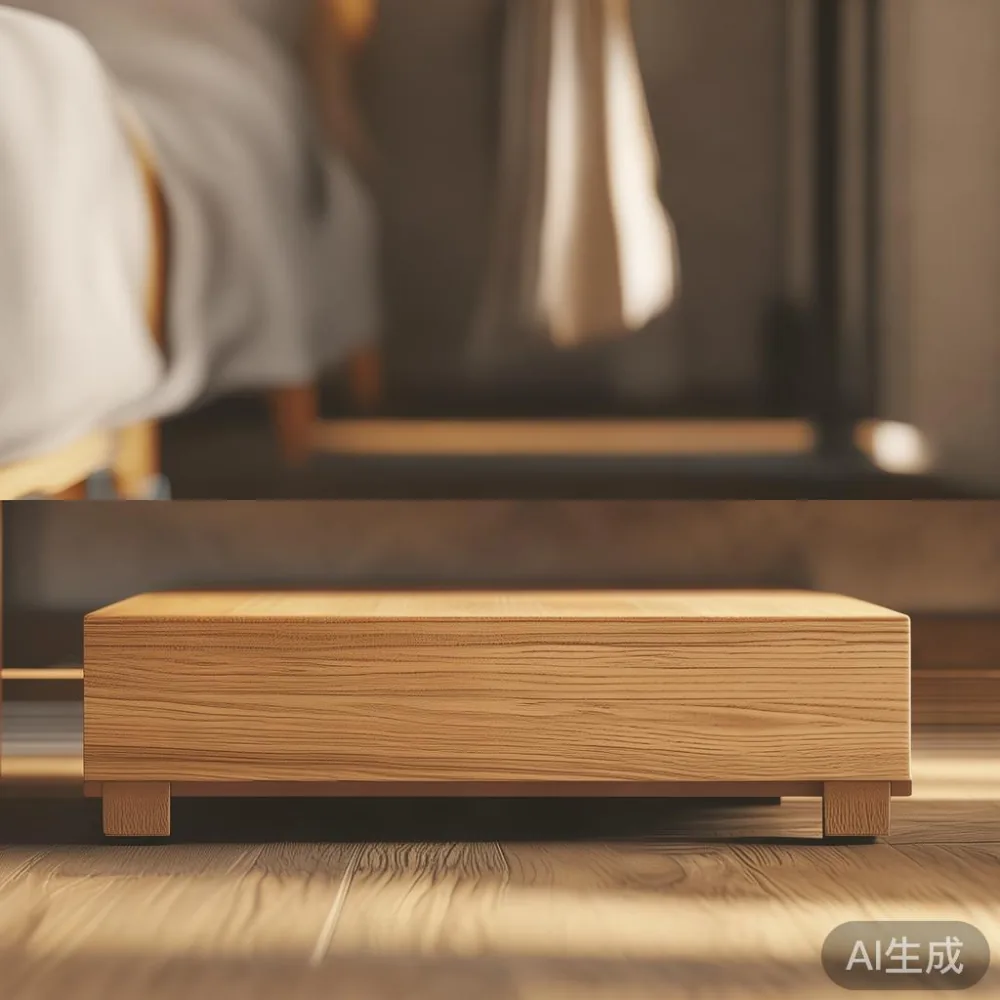
A solid wood sofa, bed frame, dining table, wardrobe, nightstand, or marble table should be described accurately. A marble table has a stone top supported by a timber frame; it is not a solid timber product. Likewise, a veneered carcass with solid wood legs is a mixed construction, not solid wood throughout.
Appearance also matters. Solid wood shows grain and small surface changes, while good veneer offers more uniform colour. For French light luxury or American light luxury interiors, restrained grain and pale oak can work well, although the finish should be chosen for maintenance rather than trend alone. Post-modern light luxury can pair warm timber with stone, brushed metal, and clean geometry.
How much do these two material options cost over 5 years?
For the comparison, consider a queen-size bed frame with a 190 by 150 cm mattress area, storage drawers, and a low pet alcove. The solid wood version is estimated at SGD 1,780 including GST. The veneered version is estimated at SGD 1,080 including GST. A Singapore buyer paying by card may add about 1.8% in merchant fees, although this is not a furniture cost.
Over 5 years, the initial solid wood premium is SGD 700. If it remains structurally sound and requires only routine cleaning, its total cost remains SGD 1,780, while the veneered example remains SGD 1,080 unless repairs are needed. On paper, veneer wins. That calculation becomes misleading if a pet exposes a weak edge, the finish peels, or a drawer fails.
A plausible repair schedule makes the difference clearer. Budget SGD 180 for professional veneer edge repair and refinishing in year 3, which raises veneer expenditure to SGD 1,260. Add SGD 220 for drawer hardware replacement in year 5, making it SGD 1,480. The solid wood item still costs SGD 1,780, but it may need only SGD 90 of wax and minor touch-up in year 4, bringing its five-year total to SGD 1,870.
That outcome gives veneer a SGD 390 advantage in this scenario. If solid wood needs SGD 350 more in refinishing because of pet staining, its total becomes SGD 2,220 and veneer trails by SGD 740. The figures are not universal. They show why a good veneer core, sealed edges, and replaceable hardware can make veneer financially competitive.
| 5-year example | Veneer | Solid wood |
|---|---|---|
| Purchase price | SGD 1,080 | SGD 1,780 |
| Expected repair allowance | SGD 400 | SGD 90 |
| 5-year expenditure | SGD 1,480 | SGD 1,870 |
| Difference | SGD 390 in favour of veneer | |
For a smaller pet feeding bench measuring 120 by 40 by 45 cm, assume an 18 kg solid oak bench at SGD 460 and a 12 kg veneered bench at SGD 280. Five years of waxing every 6 months costs about SGD 80 for either option. A replacement solid wood top at SGD 210 in year 4 pushes that option to SGD 750; replacing a veneered top may cost SGD 150, making the total SGD 510.
Who should choose veneer for pet furniture?
Veneer can suit buyers with a limited initial budget, rental flats, and pet furniture placed in dry, low-traffic areas. A slim feeding console at SGD 280 may provide more useful storage for SGD 180 less than solid wood. If your cat mainly uses a scratching panel and does not chew furniture edges, the material difference may remain minor.
The trade-off is repairability. Veneer cannot usually be restored as easily as a solid wood surface. A deep claw mark may expose the core rather than sand out cleanly. Pet urine can darken an unsealed edge, and repeated cleaning can make water-based finishes look dull.
Ask the supplier for cross-sections of the panel, details of the adhesive, and the edge-sealing method. Confirm whether the pet-facing panels are plywood, particleboard, or solid timber. If furniture will enter through a 90 cm lift opening, also request the packed dimensions and weight. A 120 cm bench that weighs 12 kg is easier to carry than the same bench at 18 kg.
Is solid wood worth the higher price for pet furniture?
Solid wood becomes more attractive when a dog climbs, chews, or repeatedly rubs against the furniture. It generally tolerates local refinishing better than veneer, provided deep splits and joint failure are absent. MIDHILL offers a 10-year structural warranty and lifetime refinishing, so the purchase should be judged against the planned service life rather than 5 years alone.
Last month I visited a colleague’s Tampines HDB flat to examine a 180 by 90 cm solid wood pet-and-coffee bench. It had survived 4 years with a 17 kg Labrador. One corner carried pale claw marks and a finish worn through a 6 cm area. After sanding and re-oiling, the patch was visible in direct sunlight but blended under the room’s warm lighting. The bench weighed 31 kg and moved through the HDB lift without tilting it onto its side.
The family wiped it with a damp cloth twice daily, kept a 5 cm silicone mat under the water bowl, and avoided ammonia cleaners. That care regime mattered. A neglected solid wood bench in Bedok, exposed to balcony humidity and repeated wet-bowl contact, could still deteriorate faster than a sealed veneer alternative.
For a pet household, the higher material cost buys repair capacity and potentially fewer replacement cycles. For example, a solid wood pet bed frame at SGD 890 that lasts 5 years has a basic annual cost of SGD 178. If it lasts 8 years, the annual cost falls to SGD 111. A veneered frame at SGD 520 replaced after 3 years costs SGD 173 per year over its first cycle.
How do delivery, GST, and access change the comparison?
Use the full landed cost, not just the product price. For furniture above US$350, MIDHILL provides free international shipping, but the quoted service and any Singapore delivery charge should still be confirmed. A local Singapore order may be delivered within 7 to 14 days, while production and consolidated freight can take 30 to 60 days. Allow another 3 to 7 days for peak periods.
A heavier solid wood item can attract higher delivery labour or an extra delivery charge, perhaps SGD 40 to SGD 120. Measure the route before ordering: flat entrance doors, lift car dimensions, corridor turns, and the bedroom doorway. For a Punggol condo with narrow corridors, choose a bed frame that separates into sections no longer than 150 cm and weighs under 25 kg per section where possible.
Singapore GST is already reflected in the prices used here. Buyers cannot simply deduct GST as a saving on a retail purchase. Compare the final invoice against your available budget instead. If the difference between solid wood and veneer is only SGD 300, but solid wood avoids replacing one SGD 520 piece in year 3, the initial premium may be recovered.
Which finish works best with pets?
For a solid wood bed frame, dining table, wardrobe, nightstand, or marble table, select a harder finish and maintain it. Water-based matte lacquer can work in dry indoor zones, while an oil or wax finish can be renewed more easily. Make sure the supplier can explain the exact coating, cleaning instructions, and repair process.
Use coasters and trays, not decorative tablecloths, on a marble table. Wipe urine quickly within 10 minutes, keep liquid away from timber joints, and clean the surface with a pH-neutral product. For a sofa with pet use, check whether the cushions are removable and whether the fabric has a stain-resistant treatment. A solid wood sofa base should be lifted at least 15 cm off the floor, with a washable cover beneath.
For a bedroom arrangement, searching how to style French provincial sofa in bedroom can lead towards pale upholstery, curved profiles, and gentle contrast. Keep the pet zone practical with a washable runner and a slim solid wood pet bench nearby. Searches for European bed vs Mid-century modern bed often compare carved details with tapered legs, but both should be selected for adequate clearance and durable pet surfaces.
If you are also reviewing Mid-century modern for dining room ideas, remember that cats belong on a designated perch rather than the dining tabletop. A 75 cm-high pet platform should sit 20 cm away from the chair zone.
What should I buy for a 5-year furniture budget?
The right choice depends on the damage pattern and the home. A dry HDB flat with a calm cat may favour veneer. A family with a medium or large dog in Tampines, Bedok, or Punggol may prefer solid wood, sealed edges, and a repairable finish. For mixed material furniture, inspect the pet-contact areas more closely than the decorative panels.
Search results for top 10 Modern furniture may highlight a dining table, bed frame, nightstand, or wardrobe, but material descriptions need careful reading. Likewise, questions about the best Mid-century modern bed for 2026 or best Mid-century modern sofa for 2026 focus on style, while pet households must also test stability, dimensions, cleanability, and weight.
For a balanced 5-year budget, use these checkpoints before payment:
- Measure the lift opening, corridor turns, and bedroom door; allow at least 5 cm clearance.
- Compare packed weight as well as product weight; ask for the heaviest fixed section.
- Inspect all pet-facing edges and joints under bright light.
- Request a written cleaning and refinishing guide with warranty coverage.
- Set aside SGD 80 to SGD 220 for five years of maintenance.
- Confirm the delivery window in writing, including whether access fees apply.
Check MIDHILL furniture information for solid wood pet furniture, the 10-year structural warranty, lifetime refinishing, 14-day returns, and delivery terms. If a custom size is needed, ask for a full-size drawing showing the mattress space, pet access, drawer movement, and lift-entry dimensions.
How can I make the final material decision?
Use a simple two-column budget. Enter the delivered price, add SGD 400 to veneer if edge or hardware repair is likely, and add SGD 90 to solid wood for routine care. Then estimate replacement years. For the example above, veneer reaches SGD 1,480 over 5 years, compared with SGD 1,870 for solid wood.
Those numbers do not make one material automatically preferable. They reveal where the money goes. Veneer offers a sensible route when furniture is protected and the budget is constrained. Solid wood offers more repair latitude when pets interact with the structure and the household values a piece that can be maintained over a 5-year horizon or longer.
Before ordering, test the finish with a damp white cloth for 24 hours and inspect any change. Keep a 90 cm-wide route clear, place bowls on washable mats, and follow a 6-month care schedule. That disciplined routine will protect either material and help your pet furniture remain part of the home rather than an avoidable replacement expense.