How Southeast Asian Humidity Affects Wood Furniture (and What Pet Owners in Singapore Should Choose Instead)
I keep a small notebook on the console table in my Tampines HDB flat. Last month, after a particularly wet two weeks, I jotted down a reading from my hygrometer: 86% relative humidity at 8 a.m., 79% by lunchtime. The wood nightstand next to my cat's water bowl felt faintly cool to the touch, almost damp. Two days later, the bottom drawer of my wardrobe started to stick. That notebook entry is what pushed me to actually test what humidity does to solid wood, and what kind of pieces survive a Singapore household with a 6 kg rescue tabby who insists on sleeping on everything I own.
Why Singapore's Climate Is So Hard on Wood Furniture
Singapore sits roughly one degree north of the equator, with average year-round humidity between 70% and 85%. During the northeast monsoon (December to early March) and the southwest monsoon (June to September), daily peaks routinely hit 90%+. For solid wood furniture, that means the cells in the timber are constantly absorbing and releasing moisture. The standard rule among joiners is that wood moves roughly 1% across its width for every 4% change in moisture content. A 200 cm dining table top can swell 4–6 mm in a single wet week, then shrink back when you run the air-con at 22°C for a few hours.
Engineered boards — plywood, MDF, particleboard — handle this less gracefully. The veneers on a flat-pack wardrobe can bubble at the edges, and the laminates on budget bed frames begin to peel within 18 months in a non-air-conditioned corridor. Solid wood, by contrast, has the structural integrity to flex and recover, provided it is properly kiln-dried, finished, and joined. This is also why pet furniture made from real timber, with its thicker panels and traditional mortise-and-tenon joinery, outlasts the hollow-core alternatives you see in many catalogue showrooms.
Is French provincial nightstand furniture worth it?
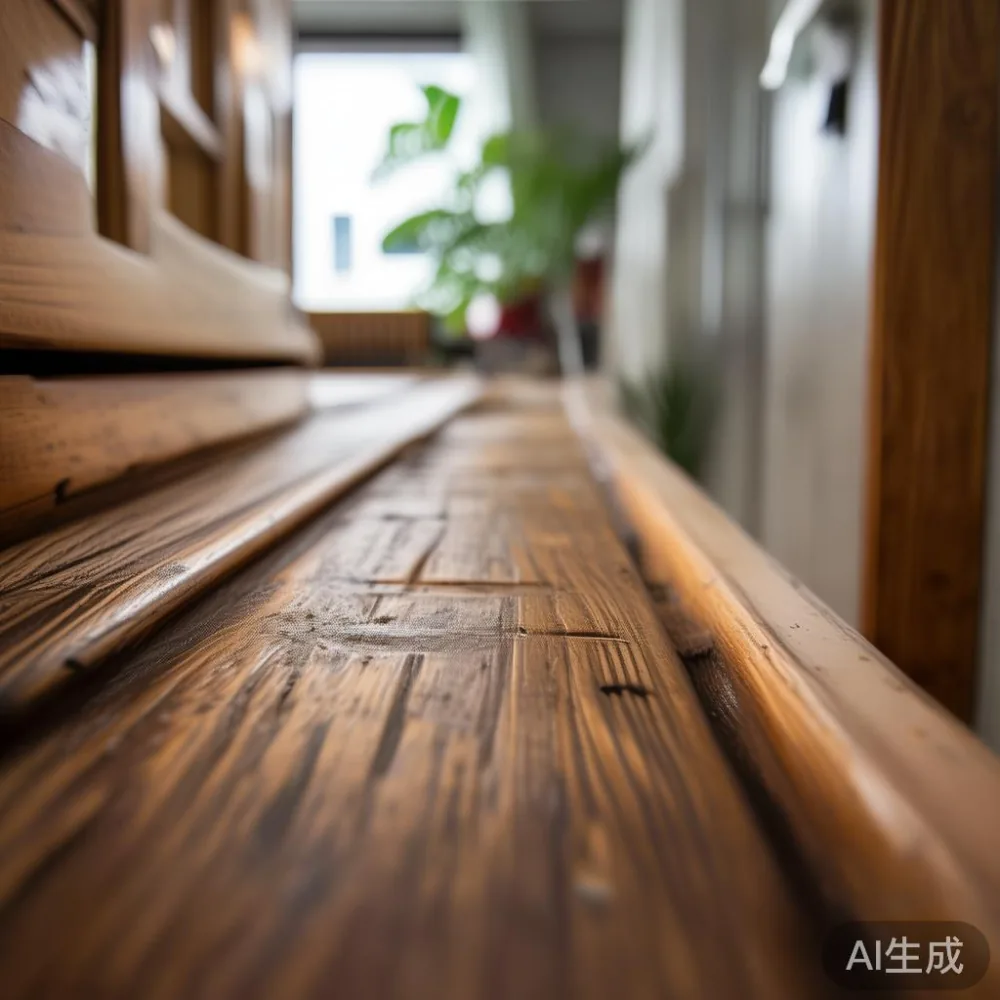
Yes — French provincial nightstand furniture is worth it for Singapore homes, because the style is built around air circulation, hand-carved detailing, and solid hardwoods like oak and beech that handle tropical humidity far better than veneered MDF nightstands from mass-market chains. A provincial nightstand is typically 55–65 cm tall, 45–55 cm wide, and 35–45 cm deep, which fits the standard 90 cm clearance beside a queen bed in a 4-room HDB bedroom. Look for pieces with raised legs (at least 8–10 cm off the floor), open or slatted backs, and hand-applied finishes rather than thick polyurethane lacquers, which trap moisture and crack within a year in our climate.
What Humidity Actually Does to a Solid Wood Sofa, Bed Frame, and Dining Table
Three failure modes show up most often in Singapore homes. The first is cupping — when one face of a board absorbs more moisture than the other, the edges curl upward by 1–3 mm. You see this on dining tables placed too close to a window, and on the wide leaves of extendable tables that are 90–100 cm across. The second is checking, where small splits open along the grain at the ends of boards. The third is joint failure, particularly in wardrobes and bed frames where dowels or cheap cam locks work loose as the wood swells and contracts.
A well-made solid wood sofa frame (typically beech, oak, or ash) tolerates these cycles because the load-bearing members are 4–6 cm thick and the joinery uses traditional mortise and tenon, often reinforced with corner blocks. The cushion covers — usually a blend of linen, cotton, and a small percentage of polyester for durability — are removable and washable, which matters in a household with pets. A bed frame in solid acacia or rubberwood, finished with an Italian light luxury solid wood wood finish — a hand-rubbed oil and wax treatment that lets the grain breathe — will outlast a laminated frame by a decade or more. The same logic applies to wardrobes: a 200 cm tall, 180 cm wide three-door wardrobe in solid wood, weighing roughly 110–140 kg, sits firmly on the floor and moves as one piece, rather than racking at the joints the way a 35 kg flat-pack will.
How HDB Lifts, Corridors, and Layouts Change the Furniture You Can Buy
Most Singapore HDB blocks have a service lift with an internal width of about 110–130 cm and a depth of 150–180 cm. A king-size mattress (183 cm × 198 cm) will not fit in a standard passenger lift, even tilted, but a bed frame disassembled into headboard, footboard, and side rails will. When my colleague moved into a Punggol condo last month, the building's cargo lift was out of service, so the delivery team had to use the passenger lift for a 220 cm dining table, disassembled into a 110 cm × 110 cm tabletop and four legs. It took 35 minutes and a lot of pivoting at the corridor corner.
Corridor widths in older HDB blocks can be as narrow as 120 cm, which is why many Singapore-bound furniture makers design bed frames and wardrobes to break down into components no larger than 90 cm × 60 cm × 35 cm. MIDHILL, a Foshan-based maker that has been exporting solid wood pieces since 2008, ships to Singapore with flat-pack knock-down joinery specifically for this reason. Their typical dining table arrives in three boxes totaling around 55 kg, and their solid wood bed frame in four boxes of 28 kg each — well within what two delivery men can carry up a HDB staircase if the lift is out. The pieces I tested reassembled in about 40 minutes with an Allen key and a rubber mallet; every dowel and bolt lined up the first time, which is not something I can say for the flat-pack I built in 2019.
Pet Furniture Choices That Survive Cats, Dogs, and Monsoon Season
Pet furniture in a tropical home has to solve two problems at once: scratching, jumping, and the occasional accident from a pet, plus the moisture stress I described above. The pet furniture category here includes reinforced cat trees (usually 120–170 cm tall, with platforms at 40 cm, 70 cm, and 100 cm), solid wood dog beds with raised slatted bases (so air circulates underneath and mould does not form), and feeding stations with marble table tops (the stone stays cool, does not absorb water, and is easy to wipe clean).
A few practical rules from the pieces I have lived with. First, choose pet furniture with replaceable sisal posts — a good post lasts 12–18 months with two cats, and replacement costs around S$25–40. Second, pick a dog bed with a base 8–12 cm off the floor, so the mattress underneath does not trap humidity. Third, a marble table used as a feeding station (typically 60 cm × 40 cm, weighing 18–25 kg) is heavy enough that a medium dog cannot push it around, and the stone does not absorb saliva or spilled water the way wood can. Fourth, for cat trees, look for a base plate at least 50 cm × 50 cm and 4 cm thick; thinner bases rock when a 5–7 kg cat lands hard. Finally, wardrobes and sideboards in living areas should be raised 5–7 cm off the floor on solid wood legs, which lets you mop underneath and prevents the bottom panels from wicking up moisture from screed floors — a common problem in newer Punggol and Bedok BTOs.
Finishes, Care Routines, and What to Ask Before You Buy
Finish choice matters as much as wood species in our climate. A thick glossy polyurethane looks beautiful in a Tampines showroom but will micro-crack within 12–18 months in a non-air-conditioned balcony. An open-pore oil or hard wax finish, by contrast, can be refreshed every 18–24 months with a 30-minute wipe-on, wipe-off treatment using a cloth and about 50 ml of oil. I do mine on a Sunday morning once a year, and the dining table still looks close to new after three years and one very determined kitten.
When you are evaluating a piece, ask the seller five questions. What is the exact moisture content of the wood at the time of packing? (The target for Singapore-bound furniture is 8–12%.) What is the thickness of the top panels? (Anything under 2.5 cm will cup; 3.5–4 cm is ideal for dining tables and sideboard tops.) How is the back panel attached? (Recessed and screwed, not stapled.) What is the warranty on structural joints? (A serious maker offers 10 years.) And what is the refinishing policy? Some Foshan makers, including MIDHILL, will refinish a piece for a small shipping-and-handling fee for the lifetime of the original owner, which is a practical answer to the surface scratches and small dents that come with a 4 kg cat or a 25 kg dog.
On price, a solid wood queen bed frame from a Foshan factory exporting to Singapore typically lands between S$1,200 and S$2,400 including GST, shipping, and lift-level delivery. A six-seater solid wood dining table in a 200–220 cm length runs S$2,800 to S$4,500. A three-door wardrobe in solid acacia or oak, 200 cm tall, sits in the S$2,400 to S$3,800 range. Marble table side tables or coffee tables in the 90–120 cm range run S$600 to S$1,400 depending on whether the stone is Carrara or a domestic grey veined marble. Most sellers, MIDHILL included, offer free shipping above US$350 (roughly S$470), 14-day returns on stocked pieces, and white-glove delivery to your HDB door on a scheduled Monday-to-Saturday slot. Delivery to Singapore from a Foshan warehouse typically takes 18–28 days by sea, plus 3–5 days for last-mile scheduling within Singapore. Plan ahead if you are furnishing a new BTO: order eight to ten weeks before your renovation handover, and you will avoid paying for storage.
A Short Checklist Before You Click 'Buy'
Measure your lift and corridor. Measure again with a 5 cm margin. Confirm the piece breaks down into boxes no heavier than 30 kg if you live above the 7th floor and want to avoid the S$80–120 carrying-upstairs fee. Read the moisture content spec, not just the wood species. Choose an open-pore oil or wax finish over a thick lacquer. Pick raised legs on wardrobes, sideboards, and bed frames. For pet furniture specifically, look for replaceable scratching posts, slatted bases, and marble or stone tops where water and food are involved. And finally, ask about the warranty and refinishing policy in writing — a 10-year structural warranty and lifetime refinishing are the practical signatures of a maker who expects the piece to be in your home for 20 years or more, through monsoons, renovations, and at least one very curious cat.