How to Choose the Right Size Solid Wood Furniture for a Singapore HDB Living Room (Without Blocking the Cat Litter Tray)
Last month I took the MRT down to Bedok to visit a flat belonging to my colleague and her partner, two adults, one corgi, and a senior tabby named Kaya who has very firm opinions about where the litter tray goes. We were there to fit a solid wood sofa, a low-profile TV bench, and a small dining table into their 4-room HDB living room, and what I learned in roughly four hours applies to almost every Tampines, Punggol, or Toa Payoh unit on the market. Singapore HDB living rooms look generous on a floor plan but lose a lot of usable space to the lift lobby, the corridor outside the front door, the air-con ledge, and the trunking that runs along the ceiling. Get your sofa size wrong by 15 cm and you either block the corridor light switch, jam the dustbin collection point, or trap Kaya behind the couch.
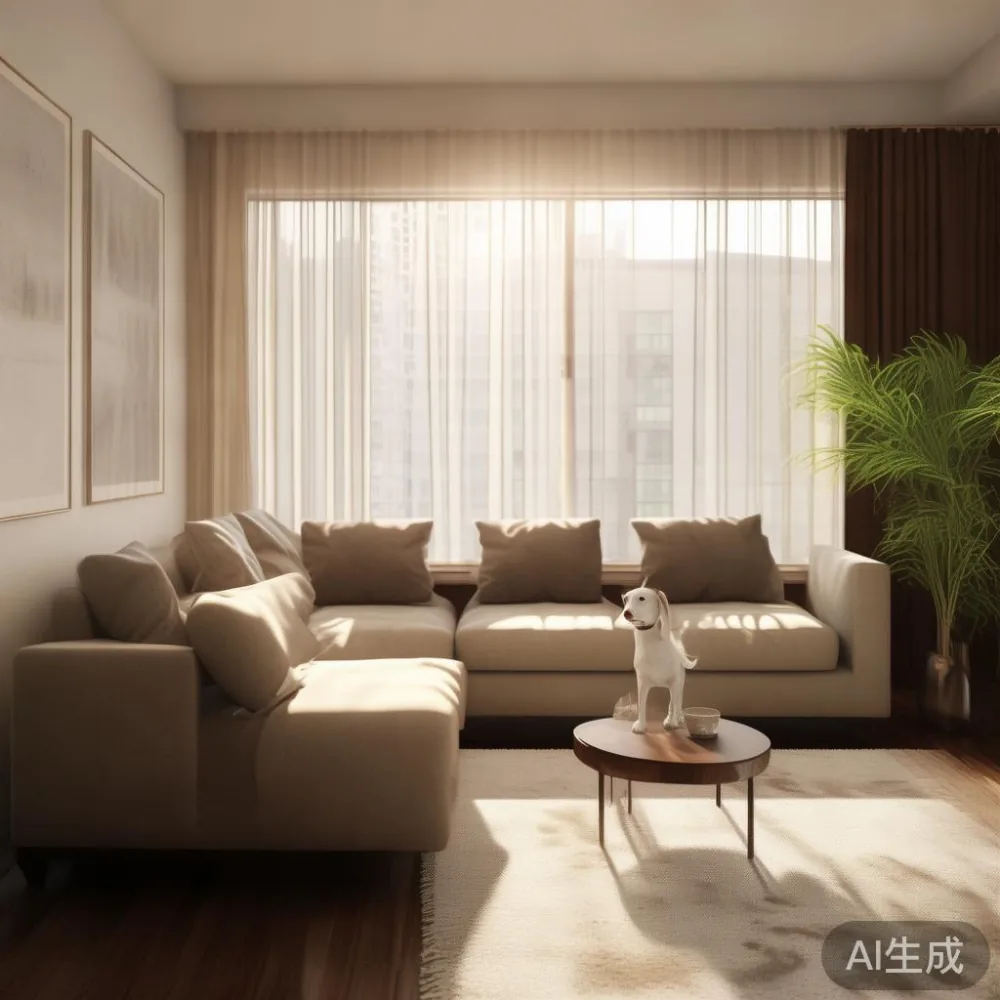
This is a pet-furniture guide at heart, because in HDB life the dog bed, the cat tree, and the scratcher all have to coexist with your main seating. Every dimension below is written from that angle first, with the human comfort layer built on top. I will reference MIDHILL once or twice as a maker I trust for solid wood construction, not as an ad, and I will keep everything in Singapore dollars and Singapore measurements so you can take the tape measure out the moment you finish.
How big is a typical HDB living room, really?
The numbers matter, so here they are. A 3-room HDB living room typically measures 2.7 m wide by 3.0 m deep, giving you roughly 8.1 m² of floor plate. A 4-room unit, which is what most buyers in Punggol and Sengkang get now, usually lands at 3.0 m to 3.4 m wide by 3.2 m to 3.6 m deep, or 10 to 12 m². A 5-room or executive flat pushes to 3.6 m by 4.0 m, around 14 m². The corridor outside your unit runs 1.2 m to 1.5 m wide, and your service lift internal cabin is about 1.5 m deep by 2.0 m wide, so any flat-pack bigger than 1.8 m has to be hoisted vertically, which is one reason solid wood pieces shipped from Foshan furniture makers who pre-assemble the frame tend to arrive in fewer boxes and survive the journey better than flat-pack alternatives.
The other constraint is the door. HDB main doors are 0.9 m wide by 2.0 m tall, and the living room doorway into the corridor is just 0.82 m. A solid wood sofa with a back height over 0.95 m and a base deeper than 0.95 m will still go through the door, but it will not go around the corner into the second bedroom, so plan for that. I keep a 1.0 m x 0.7 m chalkboard in my workshop marked with these dimensions, because every client forgets at least one of them.
What sofa length leaves room for a cat litter tray and a dog bed?
The honest answer is 1.8 m to 2.1 m for a 4-room HDB living room. Below 1.6 m, you save floor space but lose a seat, and you almost always regret it when a friend stays over. Above 2.2 m, you block the corridor air-con trunking and the cat litter tray ends up behind the sofa, which is a smell you do not want. For a 5-room flat you can stretch to 2.3 m or even 2.4 m if the back wall is uninterrupted, but only if the depth behind the sofa (to the dining wall or window) stays at 0.9 m or more so Kaya can still walk around.
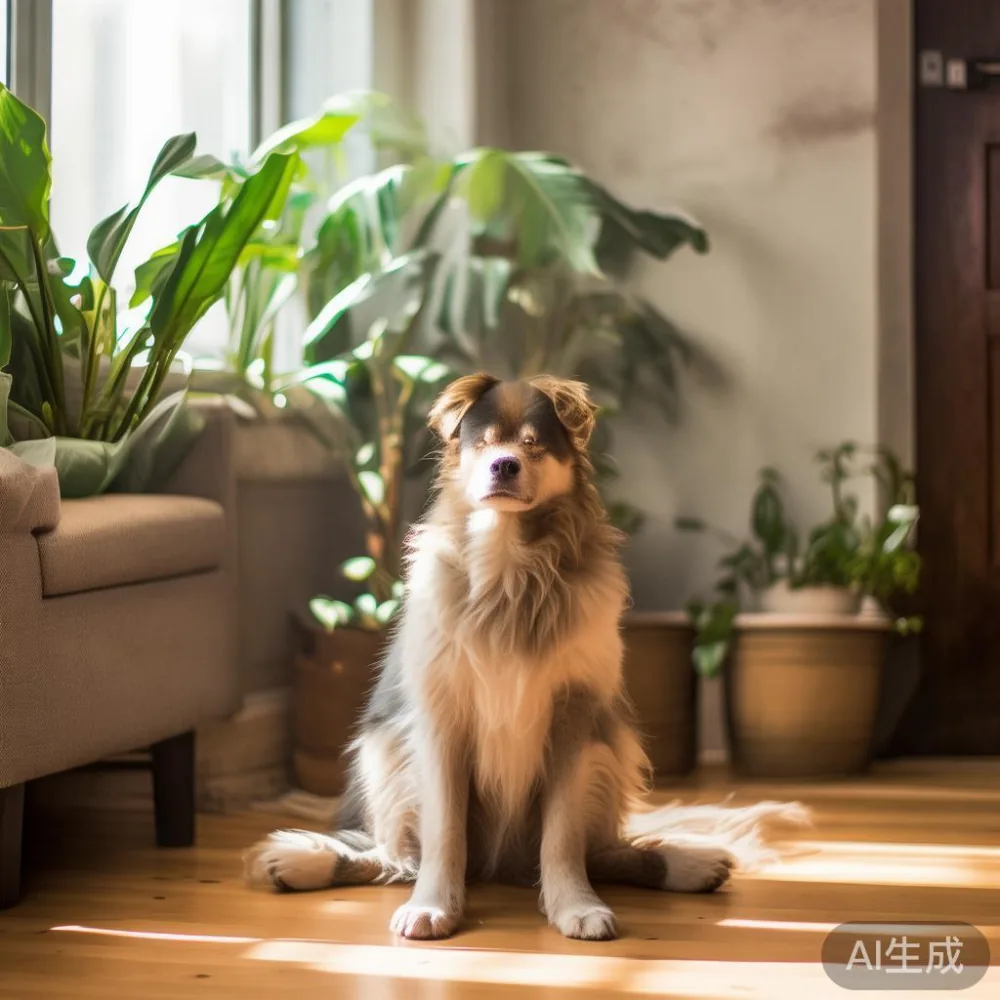
In the Bedok unit we measured, the wall between the kitchen and the living room was 3.05 m of clear run. We landed on a 2.0 m solid wood sofa in oak with a 0.88 m chaise on the right. That left 0.17 m of breathing room on each side, which is the minimum I would ever recommend. A 2.0 m sofa in Singapore retail typically runs from S$1,650 for engineered wood to S$3,200 for a true solid wood frame, and a European light luxury sofa in leather climbs to S$3,800 to S$5,500 for the same footprint. If you want a fabric light luxury sofa that survives a shedding corgi, budget at least S$2,400 and ask specifically about rub count, because 30,000 rubs is the floor I would accept for a pet household.
On the question of style, a European sofa vs Japandi sofa comparison is worth doing once before you buy. Japandi sofas sit lower, usually 0.78 m back height versus 0.85 m for European, which is friendlier for a cat tree placement against the window but can feel cramped if you are over 1.78 m tall. European light luxury styles tend to add a rolled arm and a deeper seat at 0.62 m versus 0.56 m for Japandi, which is much better for sprawling out with a corgi on your lap. For Singapore humidity, a solid wood frame in oak, ash, or beech beats MDF every time, and you can feel the difference in the air after a year of afternoon storms.
How much walking space should I leave around a dining table for two adults plus a pet?
At least 0.75 m on every side that someone actually walks on. In a 4-room HDB, that means a 1.4 m rectangular dining table, no wider, and ideally round if your floor plate is square. A 1.4 m table seats four with arms in (0.55 m per person) and seats six at a squeeze. A round 1.2 m table seats four comfortably and leaves the room open enough that the dog can nap under it without becoming a trip hazard.
When I visited the Punggol flat of a friend in HDB in March, we placed a 1.2 m solid oak round table under a 1.4 m pendant light, with four chairs at 0.48 m wide each. Behind the chairs, between the table and the wall, we kept 0.62 m, which is just enough for Kaya to stalk her toy mouse without bumping into anyone's elbows. The table itself cost S$1,150 to S$1,480 for solid oak at this size in the Singapore retail market, with a marble table variant in travertine running S$2,200 to S$2,900. Marble is gorgeous but cold for cats, who almost always pick the warmest smooth surface in the room to lie on, which is your laptop.
For the sideboard or buffet, budget 0.45 m deep and 1.2 m to 1.6 m wide, and never block the corridor air-con trunking at the top of the wall, which sits 0.22 m down from the ceiling in most HDB units. A sideboard that hits the trunking looks unfinished even if the joinery is flawless.
What size should a wardrobe and a bed frame be in the master bedroom of a real study?
For a standard HDB master bedroom of 3.0 m by 3.2 m, a 1.8 m wide by 2.0 m tall wardrobe is the practical ceiling for daily use. Anything taller runs into the air-con trunking at 2.2 m, and anything wider than 1.8 m blocks the door swing or the window curtain stack. A 1.5 m wardrobe works for a couple who travels light or shops for clothes quarterly; a 1.8 m wardrobe works for a couple who works from home and needs office storage as well.
The bed frame is where people mis-measure. A queen at 1.55 m wide by 2.06 m long eats almost half a 3.0 m bedroom. A king at 1.8 m wide by 2.0 m long eats most of it. In a 4-room HDB master bedroom that also has to hold a nightstand on each side, a study desk, and a dog bed in the corner, a queen with a 0.18 m base gives you back 0.5 m² against a king, and you feel it every morning. I measured the Bedok unit and a queen with a 0.18 m solid ash platform left 0.62 m of walking space on each long side and 0.45 m at the foot, which is enough for the robot vacuum and for Kaya to run past without knocking into the nightstand.
The best Modern wardrobe for 2026 in solid wood, in my view, runs 1.8 m wide by 2.0 m tall by 0.58 m deep, with a soft-close rail at 1.65 m and three drawers on the bottom for pet supplies. Prices for that footprint in solid oak in Singapore sit between S$2,400 and S$3,600, while MDF versions run S$900 to S$1,600. Solid wood wins again on humidity, because Singapore stays at 70 to 95% RH most of the year and engineered boards swell at the edges after two wet seasons.
Which light luxury sofa style matches a 4-room HDB living room best?
If your ceiling is 2.6 m, which is the standard HDB floor for living rooms, pick a sofa with a back height of 0.78 m to 0.85 m, arm height of 0.62 m to 0.68 m, and a seat depth of 0.56 m to 0.62 m. That keeps the proportions honest. American light luxury in Singapore tends to oversize, with back heights over 0.95 m, and it shrinks the room. French light luxury uses slimmer arms and lower backs, which suits HDB proportions, but the fabric is often linen, which a corgi will shred in six months. Post-modern light luxury in the Italian vein uses leather or high-rub-count weaves and looks sharp at 0.82 m back height, and it pairs well with a marble side table or a marble table lamp base.
On the matter of light luxury sofa vs Mid-century modern sofa, the difference for an HDB owner is the leg height. Mid-century modern sits on 0.18 m to 0.22 m wooden legs, which is brilliant because the robot vacuum and the cat can both pass underneath and you never lose storage space. Light luxury often drops the legs to 0.05 m or hides them in a skirt, which looks richer but traps dust, hair, and the occasional cat toy. In a shedding-pet home, the higher leg wins on hygiene every time.
For an Italian light luxury sofa comparison, expect Italian pieces to cost S$4,800 to S$8,500 for a 2.0 m three-seater in Singapore retail, versus S$2,400 to S$3,800 for a comparable light luxury sofa made with the same solid wood frame out of a Foshan furniture workshop. The savings, which can be S$2,000 to S$4,500 per piece, are real and they fund your pet adoption fees for a few years. I have sat on both styles and the frame quality from a serious solid wood workshop, which is what MIDHILL produces in oak and ash, is honestly indistinguishable once the cushions settle.
What about a TV console and a coffee table in a small HDB living room?
Keep the TV console at 1.4 m to 1.6 m wide and 0.35 m to 0.40 m deep, and the coffee table at 1.0 m to 1.1 m long by 0.55 m to 0.60 m deep. Anything bigger and you cannot walk between them. A coffee table at 0.38 m tall lines up with the seat of a 0.42 m tall sofa cushion, which is the comfortable reach for a tea cup and a laptop. If you skip the coffee table, leave 0.60 m of clear floor in front of the sofa so a dog bed at 0.7 m by 0.5 m can sit without blocking the path to the kitchen.
For the TV console, a solid wood frame in oak at 1.5 m wide runs S$650 to S$1,100 in Singapore retail, and an MDF version runs S$250 to S$450. Solid wood again wins on lifespan, with the bonus that a good maker will refinish the top after the dog puts a scratch in it, which is the kind of service that matters after year five.
How much budget should I set for a full living-dining package in a 4-room HDB?
For a solid wood package in oak or ash, budget S$7,500 to S$12,000 before GST for a 4-room flat, covering a 2.0 m sofa, a 1.4 m dining table with four chairs, a 1.5 m TV console, a 1.4 m coffee table, a 1.8 m wardrobe, a queen bed frame, and two nightstands. Add 9% GST on top, which lifts the same basket to S$8,175 to S$13,080. Engineered wood versions of the same package run S$3,800 to S$6,200 before GST, but you will replace the wardrobe and the bed slats within five to seven years, so the lifetime cost is closer than it looks.
For the best European light luxury furniture style in a 4-room HDB, the realistic budget climbs to S$14,000 to S$22,000 before GST for the same package, driven mostly by the sofa and the dining table. If you want post-modern light luxury with a marble dining table, add another S$1,800 to S$3,500. Under 2000 Minimalist furniture packages do exist in the Singapore market, mostly in engineered wood with paper veneer, but they will not survive a clawing cat and a teething puppy, so the saving evaporates by year three.
What about delivery, lifts, and the HDB corridor checklist?
Plan for a 35 to 55 day production window if you order from a Foshan furniture maker, plus 12 to 18 days sea freight to Singapore, plus 3 to 5 days customs clearance and last-mile delivery. From order to your living room, count 50 to 80 days. Most workshops, including MIDHILL, will pre-assemble the frame and ship in 1.8 m x 0.95 m x 0.85 m crates that fit the service lift in most HDB blocks. A few older blocks in Bedok and Toa Payoh have a smaller service lift cabin at 1.3 m deep, and you need to confirm that before you pay the deposit.
Corridor width outside your unit is typically 1.2 m to 1.5 m, and the corridor air-con trunking sits 2.2 m up, so a wardrobe taller than 2.05 m will not tilt past it. Measure your corridor before you order. I have watched a S$3,200 wardrobe sit in the corridor for six hours because the owner forgot this step.
Will a pet freight return after a scratching session?
On warranties, look for a 10-year structural warranty on the frame, a 2-year warranty on moving hardware like drawer slides and soft-close hinges, and a lifetime refinishing service on the wood top. That combination is what separates a workshop from a trader. A 14-day return window covers the obvious issues like a wrong colour or a chipped corner. Anything longer falls under warranty. Make sure the maker documents the freight return policy in writing before you pay the deposit, because shipping a 1.8 m wardrobe back to Foshan is not cheap and the paperwork has to be clean.
How do I measure my living room in 20 minutes?
Grab a 5 m tape, a notepad, and a phone camera. Measure the wall-to-wall width at three points, the depth at three points, the ceiling height at two points, the doorway width and height, the distance from the floor to the bottom of the air-con trunking, the distance from the sofa wall to the nearest power socket, and the corridor width. Write them in a list with units. Anything you cannot measure, photograph with a coin or a tape held in frame for scale. Send the list and the photos to your maker before you confirm the order. The whole exercise costs nothing and saves S$200 to S$800 in re-delivery fees.
Then layer in the pet map. Mark the litter tray location, the dog bed location, the cat tree location, the food bowl location, and the scratcher. Any furniture that overlaps those four zones gets re-sized or re-shaped. In the Punggol flat I visited in March, moving the scratcher 0.4 m along the window freed up enough wall to upgrade from a 1.8 m sofa to a 2.0 m sofa, which is a meaningful gain in seating and a meaningful gain in afternoon nap space for the corgi. Kaya approved by sitting on the new sofa within ninety seconds of delivery.
What is the one number most HDB owners get wrong?
Clearance around the air-con trunking, which is 0.22 m down from the ceiling on the corridor wall and the kitchen wall in most HDB units. A wardrobe or a tall bookcase that pushes into the trunking looks bad and blocks airflow, which raises your air-con bill by 8 to 12% a year, which over a decade in a Singapore HDB is roughly S$1,400 to S$2,200 in extra electricity at current SP Group tariffs. Always leave the top 0.25 m clear, or specify a piece that ends 0.22 m below the trunking so the eye reads it as built-in.
Final checklist before you click buy
Wall-to-wall width, wall-to-wall depth, ceiling height, door width, door height, corridor width, service lift depth, air-con trunking clearance, litter tray zone, dog bed zone, cat tree zone. Eight numbers and four zones, written down, photographed, and shared with your maker. With those in hand, a solid wood sofa, a bed frame, a dining table, a wardrobe, a nightstand, and a marble side table all fit a 4-room or 5-room HDB living room without sacrificing the pet map that keeps the household calm. Take the twenty minutes, save the S$1,400 in electricity, save the S$2,000 in re-delivery fees, and your cat will thank you by sleeping on the only piece of furniture you forgot to measure.