How to Choose the Right-Size Pet Furniture for a Singapore HDB Living Room
Choosing pet furniture for a Singapore HDB or condo living room is rarely about finding the largest piece that will fit through the door. A 90 cm sofa may look modest on a product page, yet it can block the only practical route from a Tampines lift to the flat. A 120 cm dining table may suit the family perfectly, while leaving no space for a cat to stretch beside its dining station. The right answer combines the unit’s usable dimensions, the building’s access limits, and your pet’s actual behaviour.
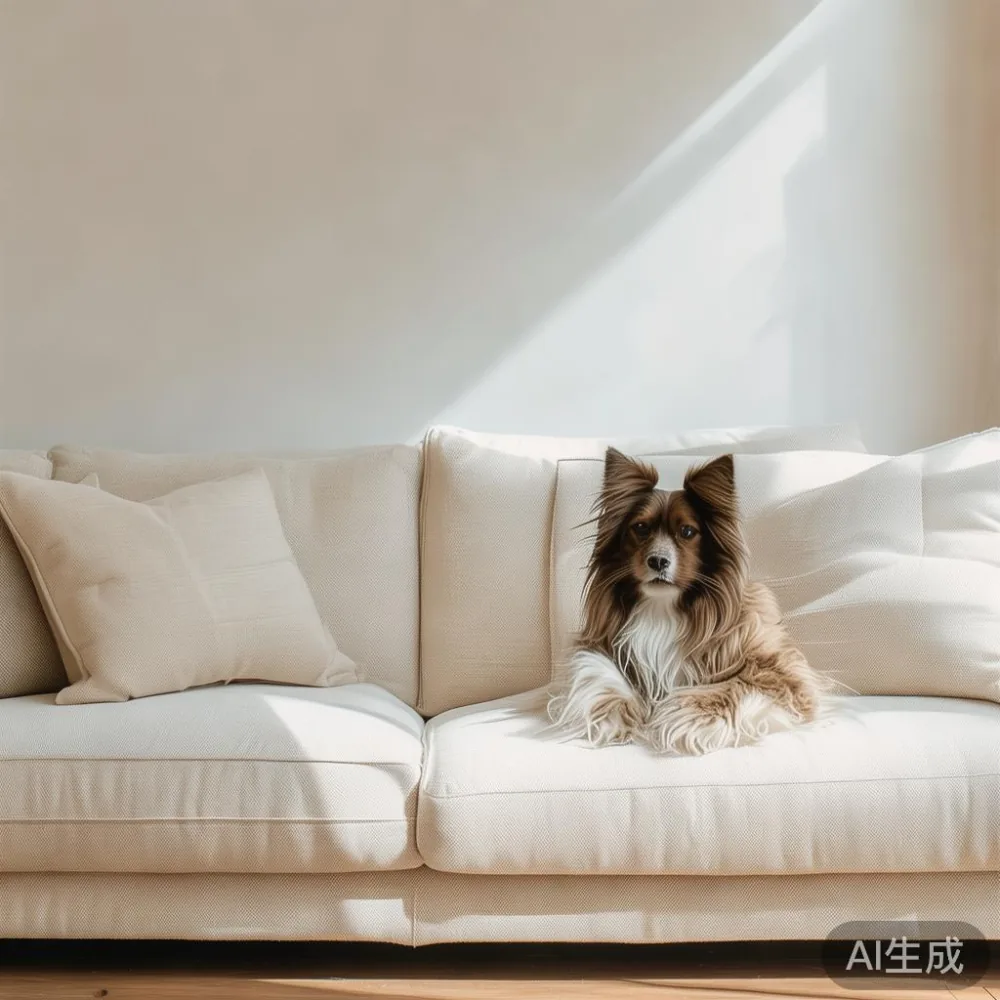
MIDHILL makes solid wood furniture for homes where proportions, materials and long-term care matter. Its pet furniture should therefore be considered as part of the room’s furniture system, not as a disposable accessory. The same measurement discipline used to place a bed frame, nightstand, wardrobe or marble table should guide every pet bed, feeding station and low table.
This guide explains how to measure a Singapore living room, check lift and corridor access, select pet furniture at a comfortable scale, and budget safely in SGD. It applies equally to HDB flats in Bedok and Punggol, as well as condos where management rules may impose stricter delivery conditions.

What dimensions should I measure before ordering pet furniture?
Begin with a floor plan, not a wish list. Measure the living room at its narrowest and widest points, including the position of the television console, dining table and main circulation route. A typical HDB three-room living room may offer about 24–28 sqm of living space, but room shape matters more than area. A long rectangular room can tolerate a 180 cm pet sofa with less apparent crowding than a square room containing a 150 cm solid wood sofa.
Record the room length and width in cm, then mark door swings, balcony thresholds, skirting boards and any projecting window ledges. Leave a main route of at least 75–90 cm where people and pets pass daily. If a person and a large dog must cross each other, 100–120 cm is more comfortable. Do not force furniture into the gap between a sofa and a coffee table merely because it fits there on a drawing.

Measure the pet zone separately. Most cats need horizontal space of roughly 100–120 cm for a fully stretched body, plus vertical clearance of 20–40 cm above a platform. A small dog may be content with 75–90 cm by 45–60 cm, while a medium dog often needs at least 100 cm by 60 cm. These are planning dimensions rather than animal guarantees; observe your pet asleep, turning and stretching before committing.
Last month I visited a friend’s four-room HDB flat in Tampines with a Labrador retriever. The room appeared large, but the chosen 120 cm pet bench was too wide for the 105 cm usable passage beside the solid wood sofa. We replaced it with a 90 cm bench and shifted the marble table 15 cm toward the dining area. The dog still had 75 cm of floor space to lie down, while the walking route became noticeably easier.
How narrow are HDB lifts and corridors?
The doorway is only one checkpoint. For HDB blocks, common lift car dimensions are approximately 110 cm deep by 135–140 cm wide internally, though older and newer buildings vary. The lift door opening may be only 90–100 cm, while the usable turning space inside can be smaller once the handrail and control panel are considered. Corridor widths frequently fall around 120–150 cm, with corners, fire doors, refuse points and recessed unit entrances reducing the practical route.
Measure the actual building rather than relying on generic HDB specifications. Ask the property management office for the lift dimensions if permitted, and visit during a quiet delivery period. Record the narrowest door or gate, the diagonal needed to turn a loaded trolley, and the height of any sign or overhead obstruction. For condo deliveries, also check loading-bay access, reserve-a-lift fees and elevator protection requirements.
Use the furniture’s largest packaged dimension, not the product’s nominal width. A pet sofa 160 cm long may pack into 165–170 cm, with cardboard corners adding another 2–4 cm. If the packaged diagonal approaches the lift’s usable depth, the piece may need to be assembled in the lobby or inside the flat. Deliveries to floors above 20 can require a second-person crew if the route includes stairs, especially for solid wood pet furniture weighing more than 35 kg.
A practical rule is to keep the packaged width below 90 cm for a straightforward single-file lift entry and below 105 cm when turning space is tight. These figures are deliberately conservative. Measure twice, take photographs, and do not assume that a corridor designed for residents can always accommodate the longest dimension of a furniture order.
How do I choose pet furniture that fits both the pet and the room?
Match the pet furniture to the animal’s dimensions and habits. A cat that likes to perch should receive a stable platform around 35–45 cm high, not a narrow decorative stool. A dog that settles beside its owner can use a low bolster seat with a firm edge, while a puppy chewer needs a replaceable cover and a solid base. For a scratching function, vertical clearance of at least 85–100 cm is sensible for a small cat and 120–140 cm for a large cat.
Leave visual breathing room around the piece. French light luxury styling usually works well when one clear pet feature is framed by negative space: a cream boucle pet daybed against a pale wall, for example, with 45–60 cm of clearance at the front. American light luxury can feel more relaxed through durable linen, oak or walnut tones and a slightly lower profile.
One elegant option is a European light luxury accent chair beside a solid wood sofa, provided the chair is wide and stable enough for the pet to rest upon rather than perch precariously. This is a styling example rather than a substitute for measuring. A Mid-century modern coffee table should sit at least 35–45 cm from the main sofa for comfortable reach, while a pet seat placed near it needs about 30 cm of clearance for entry and grooming.
Pet furniture must also earn its place. A small feeding station can sit beside the dining table, but keep at least 60 cm between the pet’s bowl and human table settings. In a compact kitchen-living area, a 90–120 cm raised feeding console may work better than a low open stand. Choose washable surfaces, rounded corners and stable joins. Avoid placing water bowls beneath a marble table, where splashes can stain stone or reach the wood finish.
What size solid wood sofa should anchor the room?
The main sofa establishes the scale for all other furniture, including pet furniture. For a compact HDB living room, a 150–170 cm two-seater or compact three-seater is often more practical than a 200–220 cm model. Measure the sofa’s full depth, commonly 85–100 cm, then preserve the recommended walking clearance. A 35–45 cm gap behind the sofa is usually enough for light cleaning, but a high-traffic route may require 60–75 cm.
Check where people actually sit before selecting the width. A family of three may use a 180–200 cm three-seat solid wood sofa, yet a 160 cm model with better spacing can feel more generous. Pet owners should not allow a pet to occupy the only clear route between the entrance and balcony. If the dog settles near the sofa, position a 90–120 cm washable mat or a slim 100–140 cm pet bench along the wall rather than in front of it.
For a home office that doubles as a living area, Italian light luxury for office is a useful design direction, with a compact sofa, tidy cable management and restrained forms. A desk typically needs 120–140 cm of width and 65–75 cm of depth. A pet chair beside the desk should not interfere with the chair’s rear movement, which commonly requires 75–100 cm. This is where knowing how to choose American wardrobe can also matter indirectly: bulky storage near the desk may reduce circulation and push pet furniture into a cramped corner.
How should I size a pet dining table or feeding station?
Size the feeding area by the number of animals and by cleanliness needs, not only by bowl diameter. A single cat may use a 40–50 cm feeding pad with a 14–18 cm bowl. A small dog may need a 55–70 cm station, while two pets should have separate bowls with 20–30 cm between them. A medium or large dog often needs a feeding surface at least 75–90 cm wide and 35–45 cm high.
Elevation can improve posture, but not every pet should eat from a high position. Check with a veterinary professional if your animal has joint, neck or digestive concerns. For ordinary use, the food and water bowls should be set at a height that allows a relaxed head position. Place the station on a washable mat extending 10–20 cm beyond each bowl.
The dining table affects this calculation. A 120–140 cm dining table generally needs 90 cm of clearance on each side for chairs, while a 160–180 cm table may need 100–120 cm. In a small open-plan HDB living room, push a compact table against the wall during weekday meals if the layout allows, then restore space later. Keep pet bowls away from cabinetry, sockets and the dining table’s chair-pull zone.
MIDHILL dining table sizes should be compared with the complete chair-and-passage allowance. A 150 cm table in a room with 75 cm of space on one side may be difficult to use. Before buying, tape the table footprint onto the floor and sit in each chair position for 5 minutes. This simple test can reveal a 15 cm conflict that dimensions alone do not show.
Will delivery, stairs and GST change my budget?
Yes. Singapore furniture quotations commonly exclude GST, and the current standard rate is 9%. Delivery charges vary with building access, floor level, carrying distance and whether the item is flat-packed or fully assembled. For a lift-access HDB flat, a standard delivery may take 7–14 days after production, while a condo with booked loading-bay access can require a longer coordinated schedule.
Ask for the following figures in writing: product price in SGD, GST at 9%, delivery fee, lift or carrying surcharge, and any return collection charge. A quotation of SGD 1,600 before GST becomes SGD 1,744 with GST, excluding delivery. The order should also specify whether the warranty covers structural integrity and what documentation is needed for claims.
MIDHILL offers a 10-year structural warranty and lifetime refinishing, which can make solid wood pet furniture easier to justify than a piece expected to be replaced quickly. Its stated delivery terms include free shipping over US$350, but Singapore buyers should still request a local SGD quotation and confirm how the threshold applies to the destination. Returns are generally offered within 14 days, subject to the relevant product condition and approval process.
Measure the delivery route before approving the final purchase. Add roughly 10 minutes for the lift if the building requires booking. For upper floors without reliable lift service, obtain a two-person delivery quote above 35 kg. Custom sizes may add 2–4 weeks, so note the promised production date as well as the delivery window.
Which room layouts work in Tampines, Bedok and Punggol?
Compact rectangular layouts benefit from wall-led pet furniture. In a Tampines three-room flat, a 120 cm pet sofa opposite a 100–110 cm television console can preserve a 90 cm central path if the room exceeds about 4.5 m in length. Place a scratching post at the end of the sofa, not directly in front of the walkway.
In Bedok, many older HDB units have narrower doors and more pronounced corners. A 90 cm-wide pet bench with detachable arms can pass more easily than a fixed 120 cm daybed. Keep the dining table at 120–140 cm where possible, and use a 35–40 cm deep console for pet storage. If a wardrobe is present, allow about 60 cm in front of its doors when opened.
Punggol family homes often combine a larger dining zone with an active pet area. A low 140–160 cm pet sofa against the wall can work when the human sofa is only 160 cm wide. For visual balance, repeat one material or colour, such as walnut-toned solid wood with a neutral textile pet cushion. Post-modern light luxury can be expressed through a simple platform, clean lines and one contrasting cushion rather than several small accessories.
For inspiration, top 10 Post-modern furniture lists can reveal useful forms, but scale every reference against your own plan. A showroom photograph may hide 20–30 cm of required clearance. When comparing European light luxury furniture under 2000 European light luxury furniture budgets, remember that the displayed item may exclude GST, delivery and local access charges.
What should I check before placing a Singapore order?
Create a final checklist before payment. The pet furniture should have the correct finished dimensions, weight, material, finish and removable components. For solid wood pieces, ask whether small colour and grain variations are expected, and confirm the cleaning method for surfaces that may encounter pet hair, saliva or water.
Check that doors, lift panels, balcony thresholds and turning points can accommodate the packed product. Add GST at 9%, delivery, lift fees and any upper-floor carrying charge to the total in SGD. Confirm the delivery window, cancellation terms, return window of 14 days, warranty coverage and refinishing scope.
Finally, test the proportions in the room. Mark the footprint with painter’s tape, leave it for 2 days, and watch how people and pets use the space during that time. If the pet blocks a route, reduce the depth by 10–20 cm or relocate the piece. If the furniture looks isolated, connect it visually with a rug, lamp or nearby dining table rather than enlarging it.
The right-size pet furniture does not dominate a Singapore living room, yet it still feels deliberate. It gives an animal a secure place without sacrificing circulation, fits through the building’s real constraints, and complements the solid wood sofa, bed frame, wardrobe, nightstand or marble table already in use. Accurate measurements in centimetres, access checks in days, and a clear total in SGD produce a purchase suited to both HDB practicality and condo refinement.