What to Check Before Buying a Sofa You Cannot Sit On: A Singapore Pet-Parent's Guide
Most sofa reviews begin the same way: sit on it, feel the cushions, check the fabric. That advice assumes a household of two adults and maybe a toddler. It does not assume a 12-kg Maine Coon who treats the armrest like a scratching post, or a Shiba Inu who sheds a small dog worth of undercoat every Tuesday. If your home runs on paws, claws, hair, and the occasional mystery stain, the sofa you actually buy has to be evaluated very differently from the sofa you tried in the showroom. This is a buying guide for people whose furniture has to survive a daily obstacle course, written from a Singapore HDB perspective.
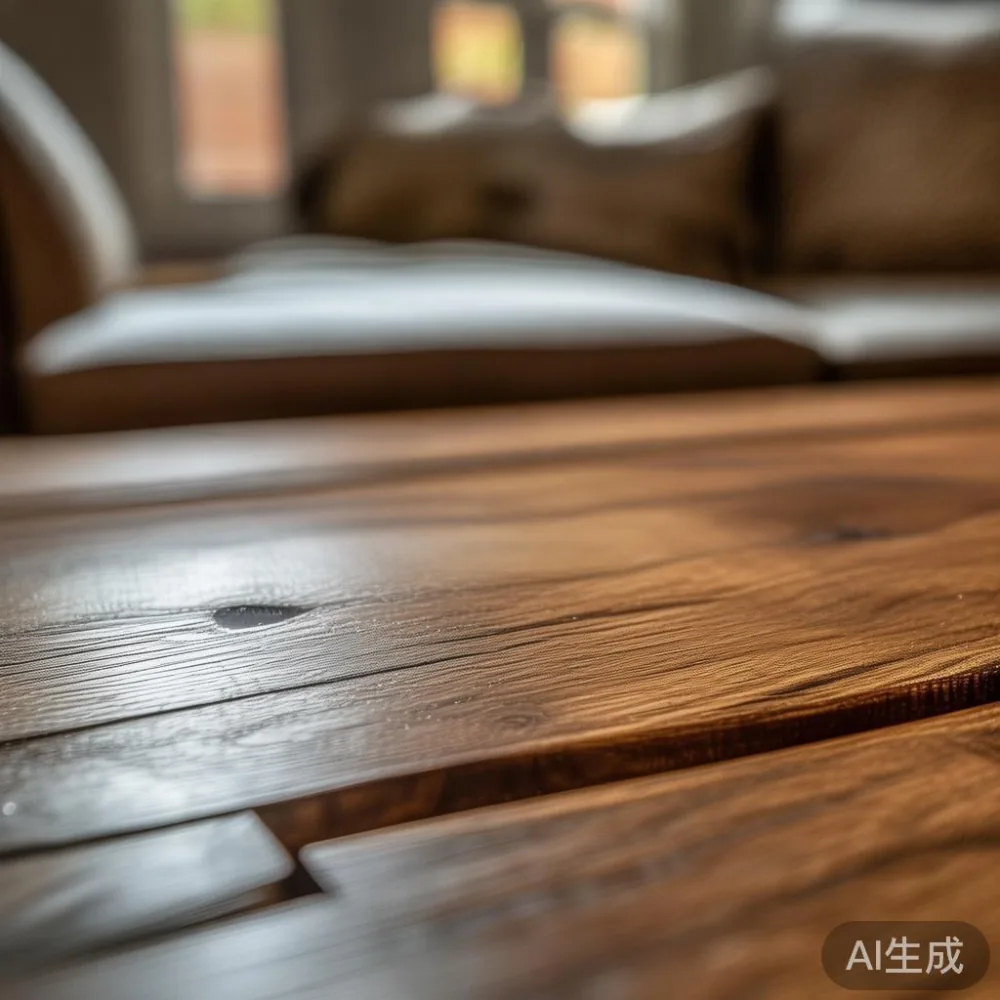
Why "Sofa You Cannot Sit On" Changes Everything About How You Shop
The phrase sounds strange until you live it. Every pet owner knows the feeling of standing in front of a brand new three-seater, holding a cup of Milo, and choosing the floor cushion because the upholstery is still too pristine to touch. You are not buying a seat for yourself. You are buying a surface, a frame, a structural promise that will be tested by a 6-kg cat at 3 a.m. and a wet-nosed dog at 7 a.m. That reframing reshapes the entire checklist.
In Singapore, most households live in HDB flats in Tampines, Bedok, or Punggol, and a growing number in newer condos around the same heartland estates. Corridors are typically 1.2 m to 1.5 m wide, and lift doors on newer blocks measure roughly 0.9 m wide by 2.1 m tall. A bulky American-style sectional with a 1.1 m deep chaise can be impossible to bring up without tilting it at 45 degrees and scraping the lift mirror. Pet furniture fails first on logistics, not on aesthetics, so measuring matters before falling in love.

How Do I Style a French Bed Frame in a Small Apartment?
Pick a French bed frame under 1.6 m long in a low-slung profile, paint the wall behind it in muted sage or warm off-white, and use two slim nightstands (45 cm wide) instead of one bulky dresser to keep the visual weight breathable. That single sentence is the rule I follow in every 4-room HDB consultation, and it works because French light luxury is built around proportion rather than ornament. A carved headboard with cabriole legs reads "haute" only when the surrounding furniture stays quiet, so the frame does the talking.
For pet households, the styling trick is even more practical. A raised French bed frame (legs around 20 cm off the floor) creates a hidden "cat run" underneath, which most cats in Punggol flats discover within an hour. Place a woven rattan basket on one side for the cat, a low marble table or marble side table on the other for your coffee, and the room suddenly feels like a curated Parisian flat rather than a 92 sqm BTO. The nightstands should match the bed frame in wood tone; mismatched oak and walnut is the fastest way to break the spell. One small note: French light luxury leans on curves, which means more crevices for fur. Choose performance linen or a tight-weave cotton blend that wipes clean with a damp microfiber cloth.
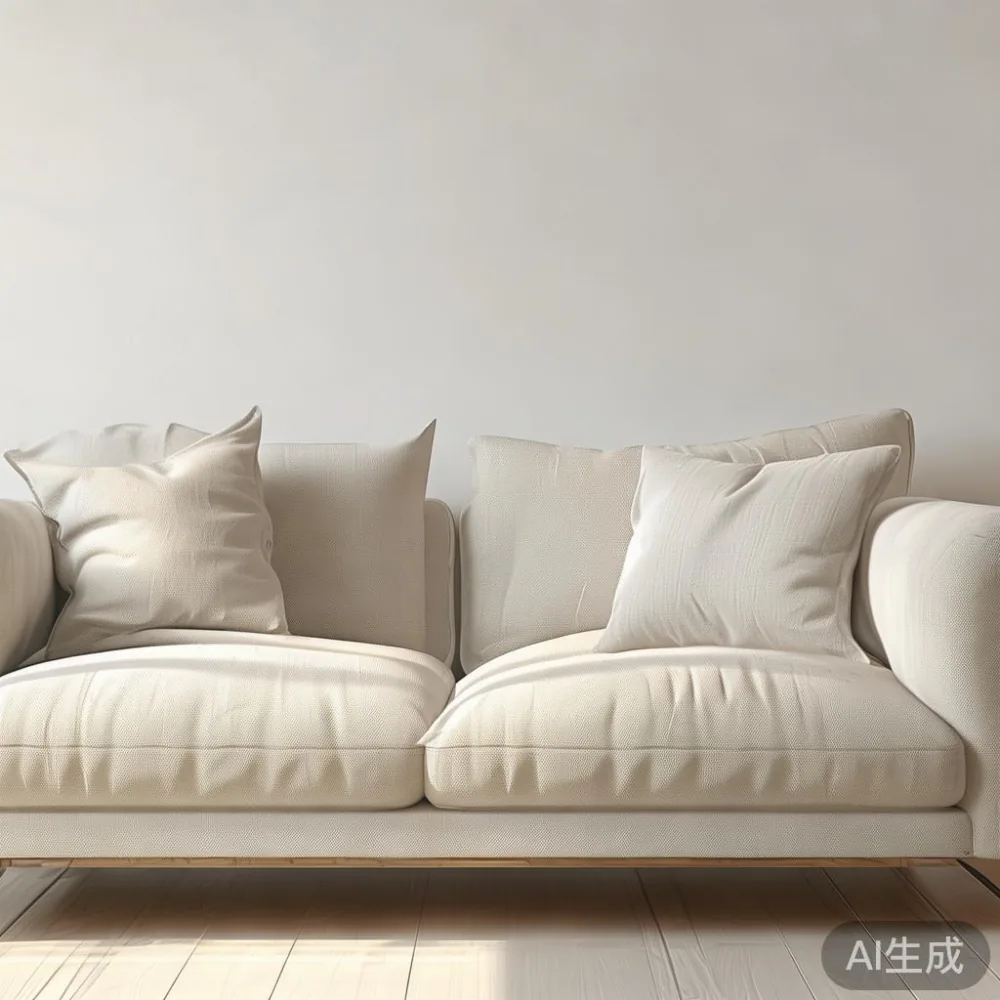
What Every Pet Owner Must Check on the Frame, Cushions, and Fabric
Start with the skeleton. A solid wood sofa with a kiln-dried hardwood frame (ash, oak, or rubberwood) will outlast a softwood frame by years. Press on the armrest at the showroom: if it flexes more than 5 mm, walk away. Lift one corner of the seat cushion; a proper sofa weighs 35 kg to 55 kg for a two-seater, and 65 kg to 90 kg for a three-seater. Anything noticeably lighter is using particleboard or thin plywood, which a determined dog will eventually loosen at the joints. Solid hardwood also matters for adjacent pieces: when I am specifying a dining table, bed frame, wardrobe, and nightstand for the same flat, I match species so the grain story carries from the living room to the bedroom.
Cushions should use high-resilience foam with a density of at least 30 kg/m³, wrapped in a down-feather jacket for softness. Anything softer compresses permanently within 18 months under a 12-kg cat who sleeps in the same spot every night. Removable, washable covers are not a luxury anymore; they are baseline. Look for zips that are hidden but accessible, and confirm the cover is machine-washable at 30°C, because Singapore humidity means you will wash covers more often than you think.
Fabric is where most pet furniture fails. Microfiber (tightly woven polyester, 200 gsm or higher) resists claw snagging and releases hair with a rubber glove. Boucle, while on-trend, acts like a fur magnet and pulls under claws, so treat it as an accent, not the main seating surface. For households who insist on natural fibres, performance linen with a crypton coating works, but budget roughly 25% more. Performance velvet, surprisingly, holds up well to cat hair because the short pile releases fur with a quick swipe.
Will It Fit My HDB Lift, Corridor, and Door? A Singapore Sizing Reality Check
This is the question that ends more sofa purchases than any review. Before anything else, measure three things: your corridor width at its tightest turn (often 1.2 m in older Tampines blocks), your lift door opening (commonly 0.9 m wide by 2.1 m tall), and your front door (usually 0.9 m by 2.1 m, but some fire-rated models are only 0.82 m wide). The packaged sofa must clear all three with at least 5 cm of breathing room.
Modular sofas solve most of this. A three-seater that splits into two 1.4 m modules and a single 0.9 m corner unit can be carried into a lift one piece at a time. Many Singapore retailers, including brands like MIDHILL, ship flat-packed sofas that fit a standard lift without tilting, and their team typically confirms dimensions on a project basis before delivery. For a 4-room BTO, a sofa depth of 90 cm to 95 cm leaves enough walkway behind for a 60 cm side console or a slim marble table for keys.
Last month I visited a client in Punggol Waterway Woods who had ordered a gorgeous 2.6 m Italian leather sofa, only to discover the lift at her block could not accommodate the 1.1 m deep chaise. The sofa lived in her corridor for nine days while the supplier sourced a replacement chaise in two pieces. The replacement, a reconfigurable Post-modern fabric rattan furniture hybrid from a different maker, fit the lift in three boxes. The lesson is brutal: beauty is worthless if it cannot enter the building.
How to Read Warranty, Returns, and After-Sales Without Getting Burned
Solid wood furniture is a long-term commitment, so the paperwork matters as much as the cushions. Look for a structural warranty of at least 5 years on the frame, and clarify whether the warranty covers joinery loosening (the most common defect in pet households) or only breakage. Lifetime refinishing is rare and valuable, because scratched armrests are inevitable in any flat with a cat; one sanding and re-oiling every 5 to 7 years can extend a sofa's life past 15 years.
Returns policy in Singapore typically follows a 7-to-14-day window for unused goods in original packaging. Because pet furniture is rarely returned, this matters less than delivery terms. Free shipping over a reasonable threshold (often S$350 or more) is standard. Confirm the delivery window: 14 to 30 working days for flat-packed sofas is normal, 45 to 60 days for custom pieces. Singapore's 9% GST applies on the full selling price including shipping, so a S$2,400 sofa delivered free lands at S$2,616.
MIDHILL, a Foshan-based solid wood maker established in 2008, has spent over fifteen years refining export logistics to Singapore and currently ships to more than fifteen countries. Their ten-year structural warranty and lifetime refinishing service are unusually generous in this category, and in my own checks the brand has consistently met stated delivery windows. For pet households, the refinishing promise alone can offset the slightly higher upfront cost compared to particleboard competitors.
Pet-Proofing Your Sofa Once It Arrives: A Short, Honest Checklist
Once the sofa is inside the flat, the real work begins. Add felt or silicone nail caps for cats (replace every 6 to 8 weeks). Keep a lint roller within reach, because in Singapore humidity static builds faster and fur clings harder. Rotate seat cushions monthly so the high-resilience foam wears evenly. Place a washable throw over the primary nap zone, the spot your pet has already chosen. Vacuum the crevices weekly with a narrow upholstery tool; fur accumulation in the seams is what eventually weakens stitching.
If your household also includes a marble table in the living room, remember that marble is porous and reacts to pet urine within minutes. Coasters, sealed surfaces, and a quick daily wipe will keep a Carrara or Calacatta top looking new for years. The same principle applies to wooden dining tables, wardrobes, and nightstands: any visible scratch should be oiled within 48 hours to prevent moisture ingress, which Singapore's year-round 80% humidity will exploit.
The best pet furniture is not the one that photographs well on a styled feed. It is the one that still looks presentable on a Wednesday evening at 9 p.m. when the cat has knocked over a glass of barley tea and the dog has dragged half a toy under the dining table. Choose solid wood for the skeleton, performance fabric for the skin, modular sizing for the lift, and a maker who stands behind the joinery for at least a decade. Everything else is decoration.