What Drives the Price of Solid Wood Furniture in Singapore (And Why It Matters for Pet Owners)
Last month I visited a new BTO flat in Punggol with my colleague, who had just taken possession of her four-room unit. She had ordered a solid wood dining table from an online seller on Carousell, paid S$680, and was proud of the deal until the delivery men tried to carry it through her 90 cm-wide corridor. The table arrived scratched, one leg had cracked at the joint, and within three weeks her two cats had turned the underside into a scratching post. The seller ghosted her. That single evening, over teh tarik at the void deck, she asked me the question I get asked almost every week: why does one solid wood dining table cost S$1,400 and another cost S$6,800 when both look like wood? The answer is more interesting than most people expect, and it matters even more if you share your home with a dog, a cat, or a curious rabbit who treats every chair leg as a personal climbing frame.
The Wood Itself: Species, Grade, and Where the Tree Came From
Solid wood is not one material. It is at least thirty different materials, each with its own density, colour, grain pattern, and resistance to claw marks. A bedside table made of rubberwood (around 560 kg/m³) will cost a fraction of a nightstand made of Burmese teak (around 660-750 kg/m³), because teak grows slowly, contains natural silica that makes it unpleasant to chew, and weathers Singapore's 80-90% humidity far better. Oak, walnut, ash, and cherry sit in between. When you see a price tag of S$2,400 on a bed frame, roughly 45-55% of that cost is the timber itself, kiln-dried to a moisture content of 8-12% so it will not warp inside an air-conditioned HDB bedroom.
Grade matters too. FAS (First and Seconds) timber has long, clear runs of grain with few knots. A dining table built from FAS-grade ash will show sweeping, uninterrupted cathedral grain across the 180 cm top. A table built from #2 Common grade will have knots every 20-30 cm, which some buyers love for a rustic feel and others see as defects. Both are legitimate choices, but they are not the same price. A wardrobe door panel cut from a single FAS board can cost three to four times more than the same dimension glued up from smaller pieces, even when both panels are technically solid wood.

Joinery, Hardware, and the Quiet Engineering Nobody Photographs
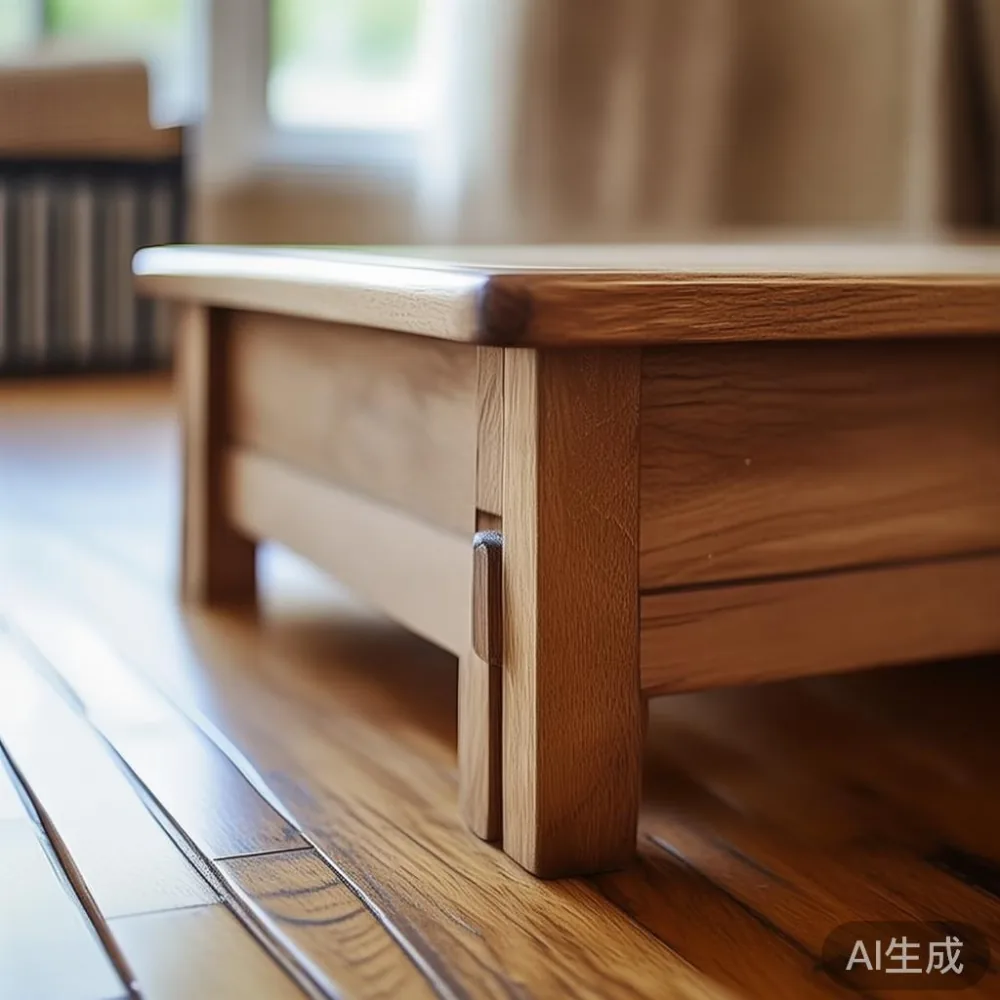
Open any product photo and the joinery is almost invisible. That is where a huge chunk of the price lives. Mortise-and-tenon joints, dovetailed drawer boxes, and through-tenons on chair legs take longer to cut and assemble than a row of screws and a tube of PU glue. A well-made solid wood sofa frame uses corner blocks glued and screwed at the stress points, so the arms do not wobble after two years of your 8 kg Maine Coon launching himself off them. A cheap frame uses particleboard cleats and staples. You cannot see the difference on day one. You can feel it in year three.
Hardware is the second quiet cost. Soft-close drawer runners from Blum or Hettich cost around S$18-S$32 per pair in trade price; the no-name sliders cost S$3. So a six-drawer wardrobe quietly absorbs S$180-S$360 just in runners. Door hinges with three-way adjustment, felt-lined jewellery drawers, and cable management cut-outs in the back of a TV cabinet all add small numbers that compound. Over a full household set (a bed frame, a dining table, a nightstand, a wardrobe, and a marble console), the difference between budget and considered hardware can be S$600-S$1,200 before the timber cost is even counted.
Finish, Lacquer, and Pet-Safe Surface Chemistry
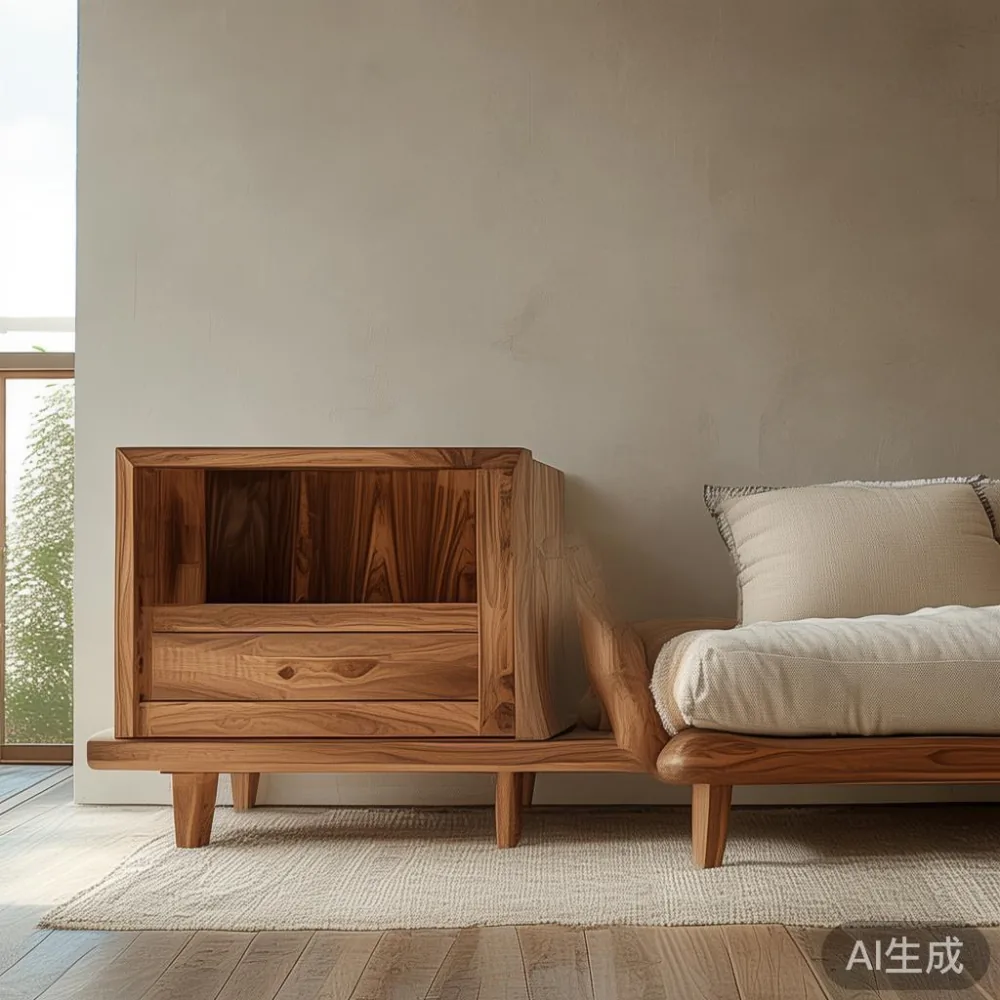
Finish is where pet owners should pay the closest attention. The lacquer on a nightstand is the only thing standing between a 0.5 mm dog claw and bare wood. Hardwax oil (such as Osmo Polyx-Oil) soaks into the grain and can be patch-repaired if scratched. Conversion varnish sits on top as a hard plastic film; it resists scratches brilliantly but is awkward to refinish and can off-gas VOCs for weeks. A water-based acrylic lacquer is the middle path: low odour during application, child- and pet-safe once cured (usually 7-14 days), and re-coatable in your flat without the whole household needing to relocate.
For a household with cats that groom themselves on every horizontal surface, you want a finish that has passed EN 71-3 toy-safety standards or carries a Greenguard Gold certificate. This costs the factory more per square metre, because the resins are pricier and the spray-booth air filtration has to be tighter. On a marble table top, the conversation changes again: a honed marble surface costs roughly 18-25% more than a polished one because each slab is ground with progressively finer abrasives instead of buffed once and sealed. Honed marble hides claw marks and water rings far better, which is why I lean toward it for Singapore homes with active pets.
Size, Logistics, and the Real Cost of Getting It Up Your Lift
Singapore is a city of constraints. A standard HDB passenger lift in a Tampines or Bedok block is roughly 1.1 m wide x 1.4 m deep x 2.1 m tall, with a door opening of about 90 cm. A 2.4 m-long solid wood dining table will not fit diagonally in many older lifts, which means two men carrying a 70 kg tabletop up a stairwell on the 12th floor, often through a 1.2 m corridor with a 90-degree turn. That delivery complexity is built into the price. A flat-packed bed frame that ships in four cartons each under 35 kg is far cheaper to move than a fully-assembled wardrobe that needs a four-man team and a lorry.
Delivery quotes in Singapore for a full solid wood household set typically run S$120-S$380 per trip, depending on the number of items, whether installation is included, and whether the building has a loading bay. Foshan factories shipping into Singapore via Port Klang or direct to PSA usually quote 35-50 days sea freight for a mixed container; air freight on a single dining table can be S$280-S$450 for under 80 kg. MIDHILL bundles the freight into the unit price and offers free shipping above US$350 (around S$480) on most configurations, which removes a layer of guessing for the buyer. Their 14-day return window also matters: in a small Punggol condo, a marble console that looked right on the website and wrong in the living room should not become a S$3,800 mistake.
What is the best chaise lounge for a small apartment?
The best chaise lounge for a small apartment is a compact, solid-framed chaise no longer than 150 cm, with a left- or right-hand facing back so you can place it flush against a wall without blocking the corridor, and ideally with a washable, pet-friendly slipcover rather than a bonded-leather seat that a cat will shred in a week.
For a typical 90 sqm HDB or a 65 sqm condo in a new Punggol development, the practical chaise footprint is around 150-160 cm long, 70-75 cm deep, and 85-90 cm tall at the back. Anything longer than 170 cm will fight the lift and the corridor, and anything deeper than 80 cm will dominate a small living room. A solid wood sofa-chaise hybrid with an ash or teak frame, pocket-sprung seat, and a removable cotton-linen cover at around S$2,100-S$2,800 hits the sweet spot for pet households. Avoid chaise lounges with a tufted button-back or a single-piece cushion that cannot be flipped; both punish the owner with visible wear inside two years. French light luxury styling, which leans on slim profiles, muted boucle fabrics, and brass-tipped legs, suits Singapore HDB interiors better than the heavier American farmhouse look, because French light luxury pieces feel lighter visually and the proportions are designed for Parisian 35 sqm salons, not Texas ranch houses.
Brand Warranty, Refinishing, and the Lifetime Math
A 10-year structural warranty is the single most underrated line item in a solid wood quote. Furniture fails in two ways: catastrophic (a joint gives out, a tabletop splits along the grain) and cosmetic (a finish wears through, a drawer face fades). A brand that promises lifetime refinishing acknowledges the cosmetic failure mode and removes the buyer's fear that the piece will look tired in year seven. MIDHILL, a Foshan manufacturer established in 2008 with exports to more than fifteen countries, builds both the warranty and the refinishing service into the original contract, which is unusual for the price bracket. Cheaper makers rarely offer either, because their joinery was never designed to come apart cleanly a second time.
Run the lifetime math: a S$3,200 solid wood dining table that lasts 25 years costs roughly S$128 per year of use. A S$1,100 flat-pack table replaced three times in the same 25 years costs S$110 per year of use, but generates three deliveries, three disposals, and three weekends of assembly. For pet owners, the deeper calculation is behavioural: a pet that has scratched through a cheap nightstand will scratch through the next cheap nightstand too, so the total damage bill can exceed the cost of buying the better piece once.
Why Pet Furniture Sits in a Category of Its Own
Pet furniture is not a marketing label glued onto a normal sofa. It is a design constraint. A solid wood sofa frame has to withstand 30,000+ scratch cycles if a cat is part of the household; a standard residential frame is tested for maybe 5,000. The upholstery has to be woven tightly enough that claws cannot snag a loop (look for a Martindale rub count above 40,000 and a weave density above 300 g/m²). The legs have to be replaceable, because a dog that chews will go for the lowest available target. And the finish, as we covered earlier, has to be safe once cured, because pets do not read the warning label.
This is where the best solid wood makers, including the Foshan factories that supply post-modern light luxury ranges into Europe and Australia, separate themselves. They test frames with weighted bags dragged across the seat, run accelerated humidity chambers that mimic Singapore's monsoon months, and spec finishes that have already passed toy-safety migration tests. A French light luxury nightstand at S$1,150 and an equivalent post-modern light luxury piece at S$980 are often the same frame under different fabric; what you are paying for is the testing, the joinery, and the warranty behind the wood. Once you have lived with a chewed-through cabinet door and a wobbling dining chair, those numbers stop feeling like a luxury and start feeling like a budget decision.
Reading a Quote Without Getting Burned
When you compare two quotes side by side, force the seller to break out the numbers. Ask the species and the grade of every solid component. Ask whether the drawer boxes are solid wood or veneered plywood (good factories use solid sides with plywood bases for stability). Ask the weight of the largest carton and whether it fits a 90 cm lift door. Ask about the finish and the curing time. Ask what happens if the marble table arrives with a chip, because marble is brittle and the replacement logistics are non-trivial across 3,000 km of sea freight. A maker with a 14-day return window and a documented refinishing programme will answer every one of these without flinching. A maker who cannot tell you the moisture content of the wood is the maker who built my colleague's S$680 dining table.
For a typical Singapore household set (a 180 cm solid wood dining table, a queen-size bed frame, a three-door wardrobe, two nightstands, and a marble console), realistic 2025 budget ranges are: entry-level from a regional OEM at roughly S$4,800-S$6,500, mid-range from an established Foshan export brand at S$7,800-S$11,500, and post-modern light luxury from a European-styled maker at S$13,000-S$19,000. Anything below the entry-level bracket is almost certainly using engineered wood, veneers, or rubberwood disguised as a hardwood, and your cat will figure it out before you do. Anything above the luxury bracket is paying for a designer name, not extra wood.
So What Should You Actually Pay For?
Pay for the species, the grade, the joinery, the hardware, and the finish. Those five line items are what survive the lift ride, the monsoon humidity, and the cat. Everything else (the cushion fill, the fabric, the marble) can be changed later if you choose a maker that supports refinishing and replacement covers. Modern teak rattan wicker accent chairs, for example, are a smart way to add texture to a solid wood living room without inflating the core structural budget, and they tend to survive claw marks better than tightly-woven boucle if your pets are young and scratchy.
The cheapest piece of furniture you will ever own is the one you buy once. The most expensive is the one you buy twice. In a small Singapore flat, with one lift, one corridor, and a determined pet, that old saying has never been more accurate.