How to Match Pet Furniture to a Warm Minimal Interior
Warm minimal interiors in Singapore often begin with a practical concern: the home has to work for people and pets without becoming visually crowded. Sofas, dining tables, beds and wardrobes still set the main rhythm, while pet furniture needs to fit around them rather than compete for attention. The right approach is to treat a pet perch, feeding station or concealed storage unit as part of the interior composition, not as an accessory added after everything else is in place.

Singapore HDB flats and condos make this especially measurable. A 12 cm gap beside a sofa may be useful in a living room, but a 180 cm lift and a 110 cm corridor can decide which pet furniture can physically reach its destination. Dimensions, clearances, weight and delivery access should therefore be checked before choosing finishes. GST-inclusive pricing also helps families compare solid wood pieces and pet furniture without juggling separate line items.
MIDHILL was established in 2008 and exports to more than 15 countries. Its solid wood furniture carries a 10-year structural warranty, with lifetime refinishing available, 14-day returns and free shipping above US$350, or the equivalent of about SGD 465 at a typical exchange rate. For Singapore buyers, the practical challenge is translating those service details into a calm, coordinated home.
What Does Warm Minimal Mean for Pet Furniture?
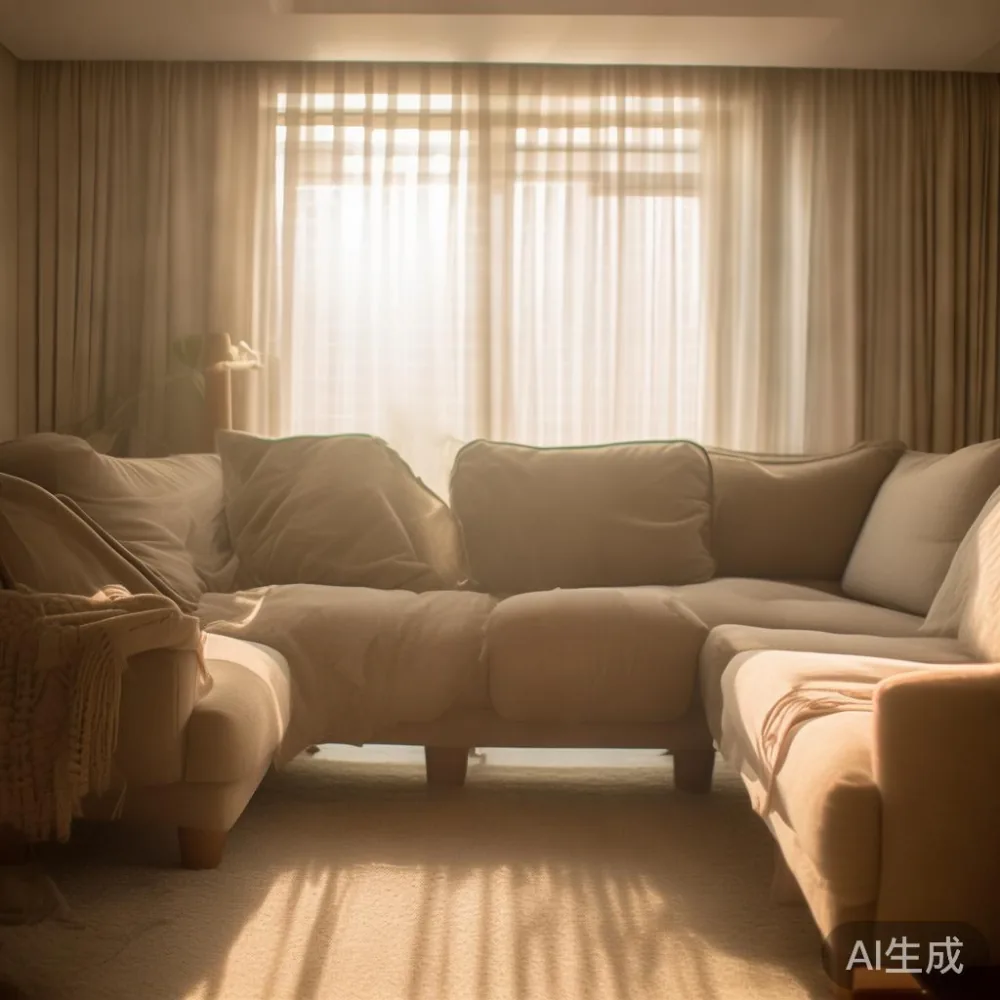
Warm minimal is softer than flat Scandinavian minimalism. Pale oak, honey-toned ash, warm walnut and muted cream create a restful backdrop, while black metal or dark-stained timber provides definition. Rather than filling every surface, the room uses a limited palette, repeated materials and a few carefully proportioned objects.
Pet furniture should follow the same palette. A low solid wood feeding bench in natural oak can sit beneath a dining table, but its bowls should not remain on display all day. A timber pet bed with a washable oatmeal cushion can echo the upholstery of a solid wood sofa. A scratching post can be wrapped in beige sisal and placed beside a bookcase rather than in the middle of a walkway.
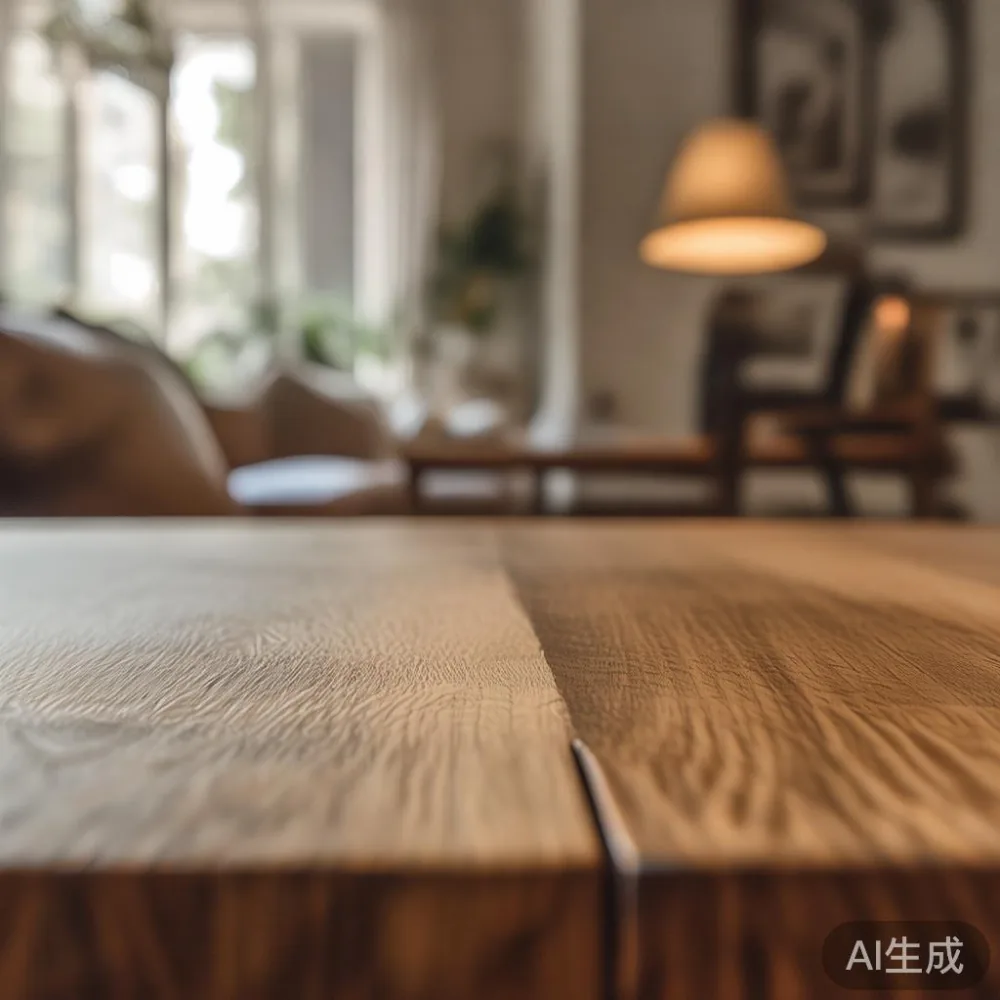
Scale is another important part of the composition. A 45 cm-high pet platform may work below a 74 cm dining table, while a 90 cm climbing unit would visually dominate a compact HDB living room. Keep visible pet furniture within 1.5 m of an existing architectural element, such as a window, wall or cabinet run, so the eye reads it as intentional.
Light-luxury positioning matters here. French light luxury tends to be softer and more decorative, with rounded edges, pale upholstery and gentle curves. American light luxury is often more architectural and symmetrical. Post-modern light luxury is less formal and more playful, allowing one sculptural pet perch to interrupt a restrained room. All three approaches can work when only 2 or 3 materials are used.
Which Pet Furniture Fits Beside a Solid Wood Sofa?
Measure the sofa first, including its total width and the space available at each end. A standard 2-seat solid wood sofa may be around 180-200 cm wide, while a larger 3-seat model can reach 220-240 cm. Do not assume that the advertised width is enough; measure from the outside edge of one arm to the outside edge of the other.
A pet side table works well when it is 4-8 cm lower than the sofa arm. Choose a depth of 35-45 cm, leaving at least 60 cm for a person to pass through a living-room walkway. If space is tighter, a 30 cm-wide wall shelf is easier to live with than a narrow freestanding table that people can collide with.
For feeding, a concealed pet cabinet can sit opposite the solid wood sofa. Look for a unit with a stable top at least 45 cm above the floor, a 20 cm bowl recess and a ventilated back panel. The feeding bowls should be placed at least 45 cm away from a draught, and the feeding area should not block a corridor wider than 110 cm.
I tested this arrangement during a visit to a Tampines HDB flat last month. The living room measured roughly 4.2 m by 3.6 m, with a 90 cm hallway leading to the kitchen. A 40 cm-wide oak feeding bench fitted beside the dining zone, while a wall-mounted pet shelf above it kept the floor open. The resident's 12 kg cat used the lower level, and the bench also served as an extra perch. The useful detail was not the bench itself but the 20 cm clearance behind it for cable and bowl access.
How Do You Fit Pet Furniture Around a Bed Frame?
Start with the bed rather than the pet furniture. A queen bed frame is commonly about 150 x 200 cm, with an footprint that can reach 165 x 215 cm depending on the headboard. Check the room dimensions, then preserve at least 60 cm along one side of the bed for opening drawers, making the bed and walking around it possible.
A small pet cot can be integrated at the foot of the bed if the room allows 70 x 45 cm and the bed is raised 25-30 cm above the floor. Choose a low-profile model with a washable cover rather than a tall structure that resembles a second bedside cabinet. A padded perch beneath a window is another option, provided the blind cord remains outside the pet's reach.
The nightstand needs roughly 40-50 cm of width and 35-45 cm of depth. Position it no closer than 15 cm to the bed frame so bedding can be changed. A pet charging shelf may be mounted nearby at 30-40 cm above floor level, but it should not compete with the nightstand's lamp and glass of water.
This is where a light luxury dressing table can become useful as a coordinated pet station. A dressing table around 100-120 cm wide provides a natural home for a grooming tray, brush and small storage box. Its top should sit at least 45 cm above the floor, and any mirror should use safety-backed glass. Visually, the table should share the bed frame's timber tone rather than introduce a completely different finish.
How Do You Style a Japanese Wardrobe in a Bedroom That Also Hosts Pets?
<A sliding-door wardrobe reduces the clearance needed in a narrow bedroom, which is useful in Bedok and Tampines flats where doors can conflict with corridor traffic. A 180 cm-wide wardrobe may need a projection of 55-65 cm, while a hinged model can require an additional 60-90 cm of operating space. Measure the open door against the actual wall, not only against the room drawing.
If a question about selecting the best Japanese wardrobe for 2026 comes up, focus on proportion, ventilation and finish rather than a decorative trend. Warm oak with straight grain suits minimalist interiors, while dark walnut adds contrast to cream walls. Inside, leave a lower compartment of at least 40 cm high for pet blankets, a 30 cm shelf for daily necessities and a ventilated section for dry food.
The practical question of how to style Japanese wardrobe in bedroom setups can be answered with one consistent rule: keep pet equipment inside one designated bay. A pull-out basket at 35 cm above the floor can hold toys, and a 25 cm-wide hook strip can carry a leash. Avoid hanging a retractable lead where a curious pet can catch the strap.
For residents comparing a light luxury bed vs Japandi bed, consider the room's architecture and the pet's habits. A light oak frame with a low profile and clean lines supports Japandi styling, while a French-style headboard creates a softer French light luxury mood. Either can work with a timber pet cot if the cot repeats the same wood tone.
A European bed vs Italian light luxury bed comparison often highlights shape and detailing: European beds may use more visible framing, while Italian light luxury beds may use sculptural curves and refined upholstery. The correct option is the one that leaves a usable 60 cm passage, allows 2 doors to open and can be cleaned around a pet zone.
Can Marble Table Surfaces Work with Pet Furniture?
A marble table can add light luxury to a warm minimal dining area, but it changes the pet-furniture equation. Marble is cool, hard and reflective, so warm timber pet furniture helps balance it. A natural oak feeding bench or walnut pet cabinet will make the dining setting feel less severe without adding many colours.
Keep food and water away from the marble table edge, even when the bowls are placed on a separate stand. Pet movement can carry grit onto the surface, and spilled water may enter the edge joint. Use coasters or a washable tray under metal bowls, and wipe the surface after feeding. If a young dog is likely to jump onto the dining area, a low solid wood dining table with a rounded edge may be more practical than a glass-topped or marble-topped version.
For a compact dining zone, allow 75-90 cm behind each chair. A 140 x 80 cm dining table seats 4, while a 160 x 90 cm model usually needs a room of at least 300 x 250 cm once circulation is included. A 35 cm-deep feeding bench placed against a nearby wall can be included without reducing the table's pull-out space.
The phrase wholesale European light luxury furniture may appeal to designers sourcing coordinated schemes, but domestic buyers should still check exact dimensions and after-sales terms. A marble table, solid wood sofa, bed frame, wardrobe and nightstand may look harmonious in a catalogue and awkward in a real flat. Singapore delivery routes add another layer: check the lift dimensions and carry the packaged weight in kilograms, not just the assembled weight.
How Will a Pet Perch Look Beside a Dining Table and Nightstand?
Use repeated heights to make pet furniture feel deliberate. A 45 cm feeding bench can align with the seat of a dining chair, while a 40 cm nightstand can sit beside a low 35 cm pet cot. Vary the shapes without varying the palette: a rectangular oak cot, a round upholstered dog bed and a slim marble side table all work when the colours remain within warm cream, light brown and charcoal.
Do not place a pet bed directly beside the dining table if the bowl area is within 60 cm. Carryover smells and food-seeking behaviour can make mealtimes less settled. In a Punggol condo with an open dining-living layout, the owner might install a 110 x 70 cm pet bed in a defined living-room corner, screened by a 90 cm-tall slatted divider. The divider should be fixed securely and must not narrow the main passage below 90 cm.
Visual weight matters too. A dark pet cabinet can balance a dark solid wood sofa, but several dark objects distributed around the room create fragmentation. Choose one main anchor and one lighter pet piece. A rug can define the pet zone, but leave 5-8 cm of clearance from cabinet toes and use a low-pile washable material.
For safety, test stability with about 10 kg of evenly distributed weight. A platform rated for a 15 kg pet should have a footprint of at least 60 x 40 cm. Scratching posts need a base of roughly 35 x 35 cm and should be fixed if the pet pulls strongly. Check cords, low-hanging textiles and open windows whenever the pet furniture is installed.
What Delivery Details Should Singapore Buyers Confirm?
Measure the route before ordering. Record the door width, lift car dimensions and corridor turns. A sofa may travel in several cartons, while a solid wood bed frame and wardrobe are often delivered as protected components. Ask for the number of cartons, each carton length, width and height, and the total weight in kg. This information determines whether a 90 cm lift can turn from a 120 cm corridor into a 85 cm doorway.
Allow 7-14 delivery days for made-to-order pieces, subject to production and stock availability. Someone should be present for delivery, and the packaging should be checked for dents, loose joints or water marks before acceptance. Confirm whether assembly is included, how many people are needed and whether old packaging is removed.
Singapore purchases should show GST-inclusive pricing. As a guide, a 120-160 cm solid wood sofa may range from SGD 2,200 to SGD 6,500, a queen solid wood bed frame from SGD 1,200 to SGD 3,500, a 140-160 cm dining table from SGD 1,000 to SGD 3,200, and a 150-180 cm wardrobe from SGD 1,600 to SGD 4,800. Custom sizes and denser timbers can increase these amounts.
Pet furniture may add SGD 180 for a compact timber feeder, SGD 350 for a raised oak cot and SGD 650 or more for a fitted pet cabinet with drawers. These are typical planning ranges rather than fixed quotations, but they help establish a budget before comparing quotes.
How Do You Build a Cohesive Warm Minimal Pet Home?
Begin with a floor plan, then take photographs from the doorway in both morning and evening light. Mark the 90 cm primary route, the 60 cm secondary route and the required clearance around doors. Place pet furniture only after the solid wood sofa, bed frame, dining table, wardrobe, nightstand and marble table positions are understood.
Limit the main palette to 3 finishes: one warm wood tone, one neutral textile colour and one accent such as black metal or muted sage. Keep hardware consistent in 2 sizes, for example matte-black handles and hooks. Repeat wood in the pet feeding bench and bed cot, while repeating the textile colour in the sofa cushion, pet mattress and dining bench pad.
Final checks should cover cleaning and movement. A pet feeder should be wipeable, a cot cover should wash at 30 degrees Celsius, and scratchable surfaces need a replaceable panel where possible. Observe the pet's route for 7 days and move the piece by 10-20 cm if it creates tension near a doorway or sofa.
A successful warm minimal home does not remove pet life from the composition. It gives that life a measured place through matching timber, repeated colour and honest clearances. The result can still feel light, durable and quietly luxurious, with every pet furniture piece earning its footprint.